Colombia's National Disaster Declaration 2026: Expat Impact
Colombia's national disaster declaration 2026 unlocks decree powers after the Aug. 10 quake — what tax-resident expats in Medellín should watch.
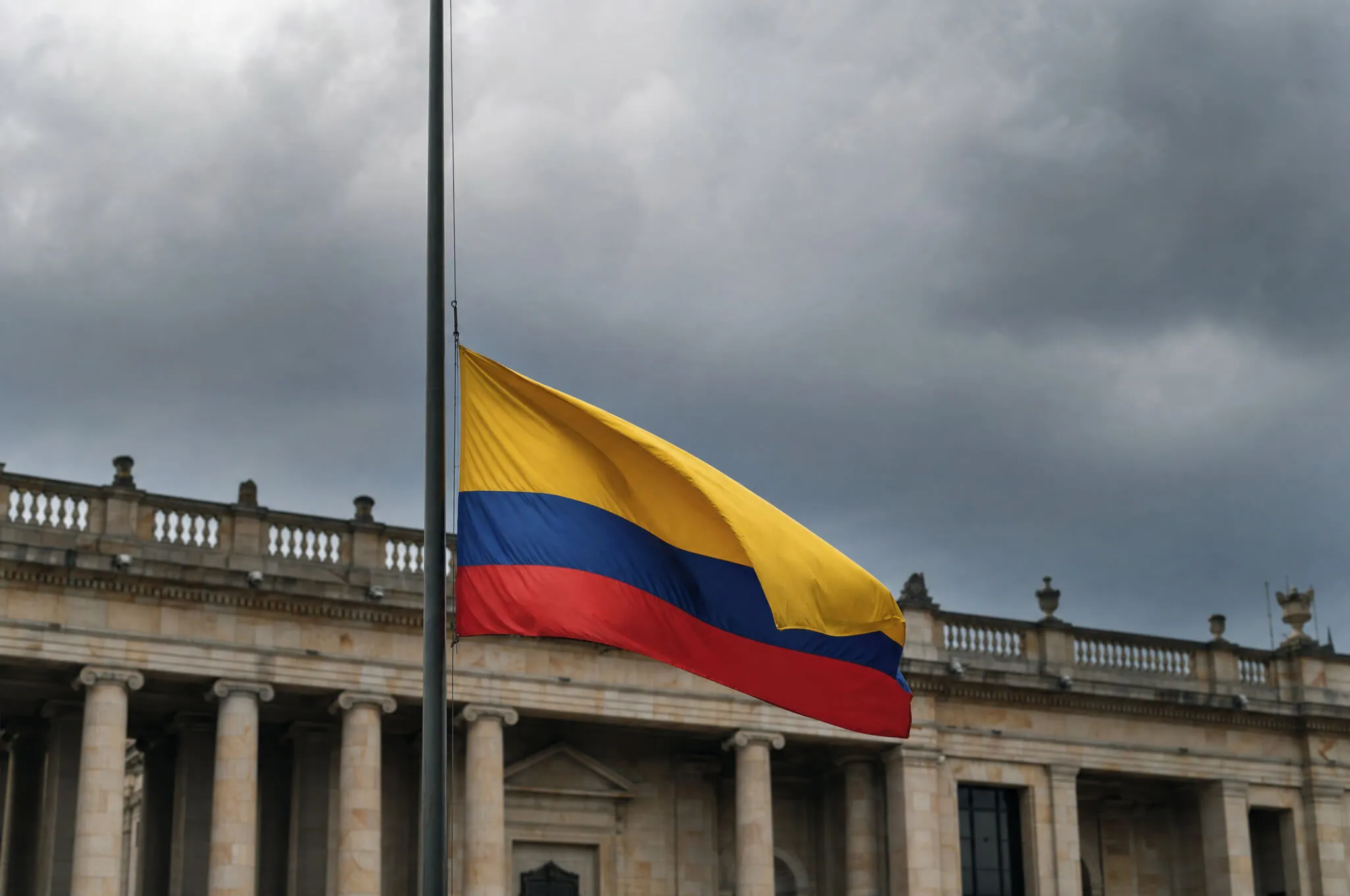
Colombia’s national disaster declaration 2026 is now in effect nationwide. Hours after a magnitude-7.4 earthquake struck western Colombia on the morning of August 10, President Abelardo De la Espriella and his full cabinet voted to declare a desastre de carácter nacional — a legal step that hands the executive faster, decree-level authority to respond, without waiting on Congress (Infobae).
For Americans living in or visiting Medellín, the declaration itself changes little day to day. The declaration is a Law 1523 disaster tool: it fast-tracks emergency contracting and disaster-fund spending, requires no congressional vote, and cannot touch taxes or visas. A louder, separate push now underway — for a much broader emergency power that could reach your wallet — is the thing actually worth watching if you’re a Colombian tax resident. More on that below.
Updated: evening of August 11, 2026, Bogotá time. The casualty and damage figures in this piece are snapshots of a fast-moving story and will be revised again; the U.S. Embassy alert and USGS page linked below carry the latest.
If you’re in Medellín right now
- The city itself came through without deaths or full building collapses. Mayor Federico Gutiérrez’s preliminary balance on August 10 reported no fatalities and no complete structural collapses in Medellín, though several high-rises — including the La Alpujarra government complex — were evacuated as a precaution while crews inspected them (El Colombiano). Citizens reported cracked walls in the San Diego sector and in neighboring Envigado, which the city’s fire department and 40 structural engineers were still verifying (El Colombiano).
- Metro de Medellín suspended Lines A and B and six Metrocable lines on August 10 to inspect stations, viaducts, and pylons; the Ayacucho tram and city buses kept running (El Colombiano). Confirm your line is back in service on Metro’s own channels before you travel.
- Neither of Medellín’s airports was on the closure list still in effect as of Tuesday, August 11. Seven airports suspended operations in the immediate aftermath on Monday, August 10; by Tuesday that roster had narrowed to five — Pereira, Manizales, Armenia, Cartago, and Buenaventura. Quibdó and Cali’s Alfonso Bonilla Aragón, both on Monday’s initial list, had reopened by Tuesday, with Cali back to normal once power was fully restored. Pereira’s terminal building remained among the more seriously damaged (Infobae, Aug. 11; Tech Times).
- José María Córdova (MDE) briefly evacuated as a precaution Monday morning but was never on the closure list. It still saw network-wide delays as aircraft and crews were rerouted around the closed cities (AeroXplorer). Check your flight status directly with your airline before heading to the airport.
- For real-time updates, the U.S. Embassy in Colombia issued a natural-disaster alert on August 10 with safety guidance for Americans in the country, including a reminder to enroll in the Smart Traveler Enrollment Program (STEP) for direct alerts (U.S. Embassy Colombia). Colombia’s Servicio Geológico had logged more than 60 aftershocks by August 11 and warned more are likely (Infobae), so treat any specific figure here as current only as of this update.
What the earthquake did
The quake’s epicenter was 5 km south of San José del Palmar, Chocó, at a depth of roughly 110 km, and it was felt strongly across Medellín, Cali, Pereira, Manizales, Quibdó, and Bogotá alike (USGS; France 24).
The casualty count depends on which snapshot you’re reading. The government’s own preliminary tally, released the morning of August 11, put it at 132 deaths and 570 injured (Infobae). By that evening, international outlets tracking the response in real time had moved well past it: CNN’s live count read 224 dead, and CNBC reported the same figure, with more than 1,200 injured, as rescue crews still hadn’t reached the hardest-hit areas around the epicenter (CNN; CNBC). Treat both numbers as snapshots of an unresolved count, not a final toll.
Beyond the human toll, as of August 11:
- 1,575 homes damaged, 37 destroyed, and 61 buildings collapsed nationwide (Infobae)
- Airport closures peaked at seven on August 10 and had narrowed to five by August 11 (see above for the current roster) (Portafolio; Infobae, Aug. 11)
- Antioquia’s own damage report, from the departmental government’s unified command post, logged one death, 12 injuries, and structural damage in 40 of the department’s 125 municipalities — including a collapsed church dome in Venecia and a partially collapsed house in Támesis — with 697 homes, 122 schools, 29 churches, and 19 health centers affected (El Tiempo; Semana)
That last figure is also the one Senator María Clara Posada has been citing in Bogotá while pushing for the broader emergency power described below — a real number from Antioquia’s own government, even if the political ask built on top of it goes further than the damage alone would require (Infobae).
What Colombia’s national disaster declaration 2026 actually unlocks
A desastre de carácter nacional is Colombia’s fastest legal gear-change for disaster response — a declaration under Law 1523 of 2012, the country’s disaster-risk-management statute, not a full constitutional state of exception. It does not touch taxes and doesn’t require a congressional vote. In practice, it lets the national government:
- Skip ordinary public-bidding rules for emergency contracts
- Tap the National Disaster Risk Management Fund directly
- Temporarily occupy or administratively expropriate property needed for the response, with compensation
- Offer credit refinancing to affected residents
(Semana)
Crucially, it does not hand the president tax-decree power, and it stays subject to review by the Consejo de Estado and fiscal oversight by the Contraloría. So far, the one concrete measure announced under it is rental subsidies for more than 1,000 displaced families in Chocó (El Tiempo).
The bigger ask: a full economic emergency
Where it gets more consequential is a separate, louder push from Congress and business groups for De la Espriella to also invoke Article 215 of the Constitution — a full State of Economic, Social and Ecological Emergency. Senators Sara Castellanos, Christian Garcés, and María Clara Posada, among others, are asking for it explicitly (Infobae; Portafolio).
Unlike the disaster declaration, Article 215 lets a president issue decree-laws that can create or modify taxes temporarily, bypassing Congress entirely, subject only to Constitutional Court review.
Colombia has done this before. After the 1999 Armenia earthquake, President Andrés Pastrana declared this same emergency and decreed the “2x1000” tax on financial transactions — a levy that outlived the emergency and evolved into today’s permanent 4x1000 (El Tiempo). As of this writing, De la Espriella had not invoked Article 215.
| Disaster declaration (Law 1523) | Economic emergency (Article 215) | |
|---|---|---|
| Congressional vote required? | No | No |
| Can create or modify taxes? | No | Yes, by decree, temporarily |
| Review body | Consejo de Estado + Contraloría | Constitutional Court |
| What it funds/does | Emergency contracting, disaster-fund spending, property occupation for response, credit refinancing | Whatever the decree-laws specify — historically has included new taxes |
| Status as of Aug. 11, 2026 | Active, declared Aug. 10 | Requested by senators and business groups; not invoked |
What this means if you live in Medellín
Nothing in visas, cédula processing, or your 2026 tax bill has changed as a direct result of the disaster declaration itself. If you’re a tax resident here — meaning you’ve spent more than 183 calendar days, continuous or not, in Colombia within any rolling 365-day window — the thing to actually track isn’t this declaration but whether De la Espriella, barely three days into office, moves to Article 215. One wrinkle worth knowing: if that 365-day window straddles two tax years, residency attaches starting from the second year, not the first (DIAN, Art. 10 residency guidance).
That’s the mechanism with real precedent for reaching into resident income and transactions directly by decree, without a congressional vote. It would also be a notable pivot for a president whose finance team has otherwise talked fiscal restraint, not new revenue.
This is reporting, not legal or tax advice — if the 183-day threshold might apply to you, confirm your specific situation with a Colombian contador.
For now, this sits alongside Washington’s newly pledged security aid as a story about how much reach a three-day-old government already has — worth watching, not yet worth acting on.
Quick answers
Does the disaster declaration change my visa or 2026 tax bill?
No. Law 1523 disaster declarations fund emergency response — they don’t touch immigration status or tax law. Only a separate Article 215 economic emergency could reach taxes, and De la Espriella hasn’t invoked one.
What’s the difference between the disaster declaration and Article 215?
The disaster declaration (Law 1523) fast-tracks contracting and disaster-fund spending and requires no congressional vote, but can’t touch taxes. Article 215 is a broader constitutional emergency that can create or modify taxes by decree, subject only to Constitutional Court review.
Is Medellín affected?
Yes, but not severely: no deaths or full building collapses as of the mayor’s August 10 balance, some cracked walls under inspection, a same-day Metro suspension, and no closure of either MDE or Olaya Herrera airport. The real damage is concentrated in Chocó, Valle del Cauca, Risaralda, Caldas, and Quindío, plus Antioquia’s rural southwest.
The bottom line
As of August 11, 2026, Colombia’s national disaster declaration is real and active, but it’s an administrative tool for disaster response, not a tax lever. The louder political fight — over whether to invoke Article 215’s full economic emergency, the mechanism with a documented history of producing new taxes by decree — is still just a request from lawmakers and business groups, not a decision. Treat every figure above as a snapshot from the evening of August 11; death tolls, damage counts, and the emergency-powers question are all still moving.

Founder of Medellín.co — a long-time resident writing about living in and visiting the city, including regular coverage of the Colombian peso/dollar exchange rate and its effect on expat budgets.
Continue reading

Colombia US Tariffs 2026: Trump Asked to Pause 12.5% Duty
Colombia US tariffs 2026: President De la Espriella asked Trump to suspend the 12.5% duty after the quake. What it means for the peso and prices.

Barranquilla Accords: What Colombia and the US Just Signed
The Barranquilla Accords between Colombia and the United States, signed Sept. 8, 2026 — what the Rubio-De la Espriella deal means for expats.

Colombia Deportation Targets Irregular Migrants in Medellín
Colombia deportation operations against irregular migrants were ordered the week of Aug. 24 — what Medellín expats with lapsed status should know.