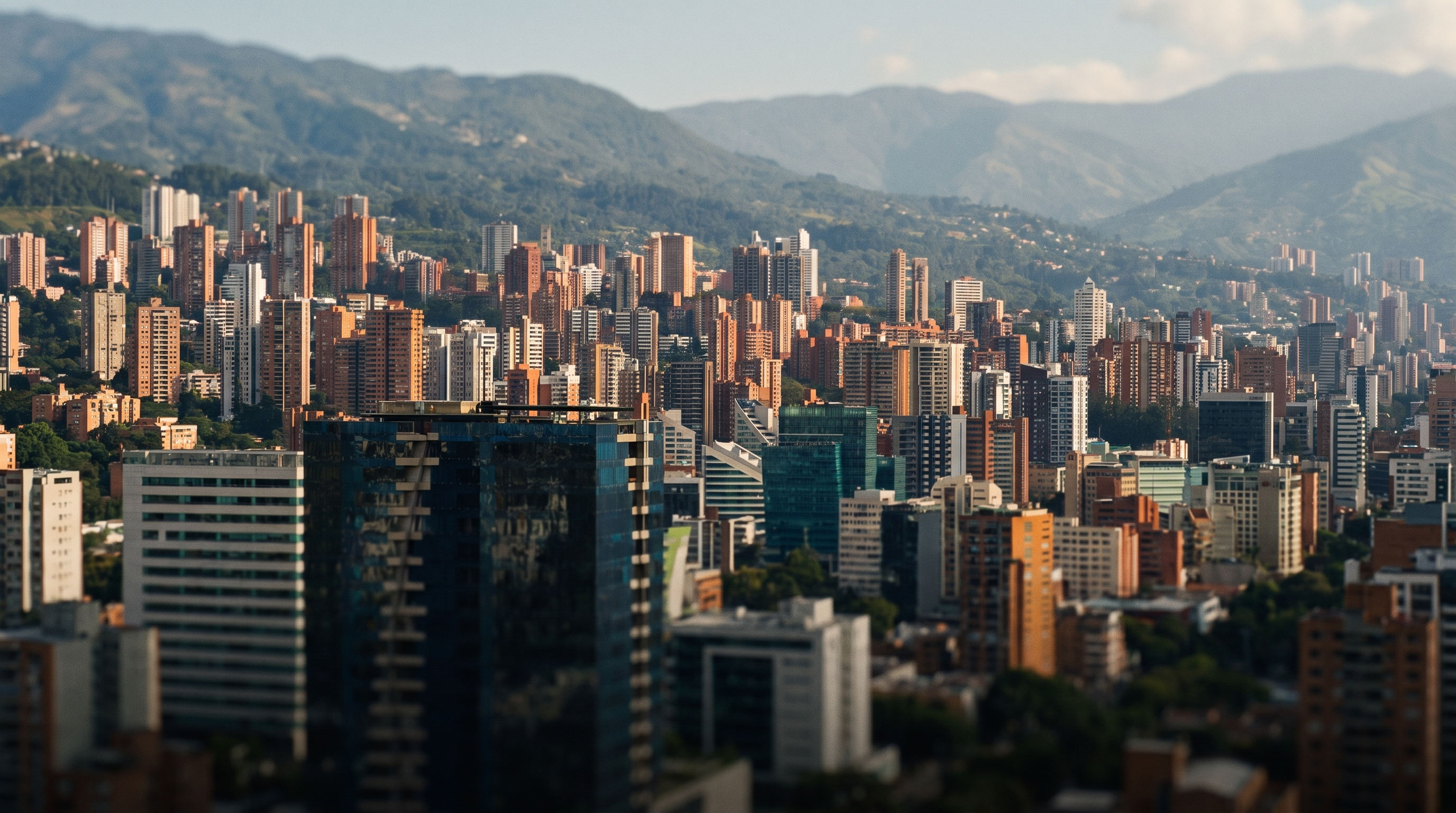
Medellín, comuna by comuna
The city is a valley of distinct neighborhoods, not one blur. Find the corner that fits how you want to live: leafy and social, flat and local, or high up with the view.
How the city is organized
A little local literacy goes a long way here. Two words unlock most conversations about where to live.
Comunas & barrios
Medellín is carved into 16 comunas (numbered urban districts), plus 5 corregimientos, the greener rural townships on the edges. But a comuna is really a cluster of barrios, and the barrio is the unit that matters: El Poblado is Comuna 14, yet you'll actually live in Manila, or Astorga, or Provenza.
What "estrato" means
You'll hear estrato constantly. It's Colombia's socioeconomic rating from 1 to 6, stamped on every address and printed on your utility bill. It sets what you pay for water, gas and electricity (higher estratos subsidize lower ones) and works as local shorthand for a neighborhood's cost and polish. El Poblado runs 5–6; Laureles 4–5; much of the city sits comfortably at 3.
Start with an area
Each guide covers the honest take, its barrios, where to stay and eat, and how a local spends a day.
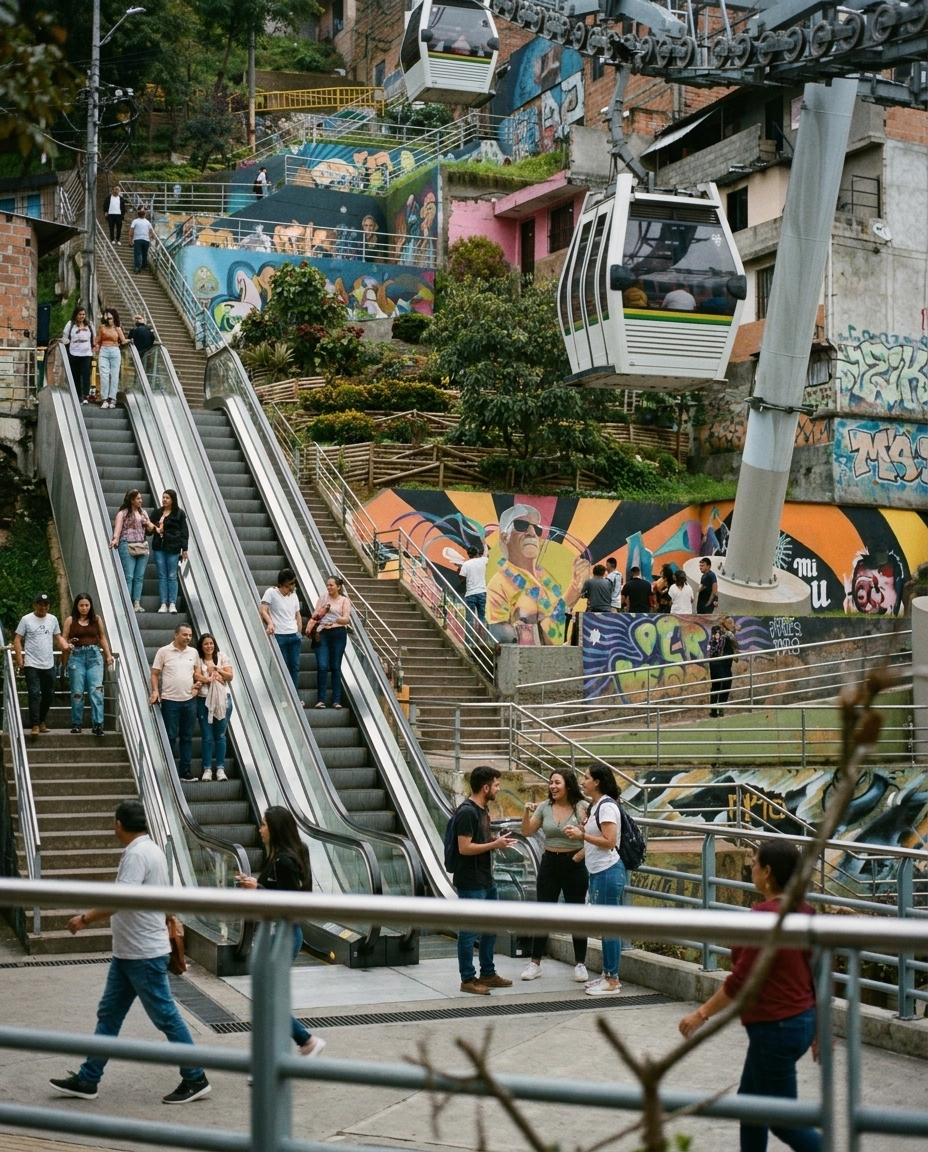
Comuna 13
The city's comeback story: once its most dangerous corner, now a hillside of street art, music and the famous outdoor escalators.
El Poblado
Medellín's leafy, upscale heart: rooftop bars, walkable streets, and the softest landing for a first trip or a first month.
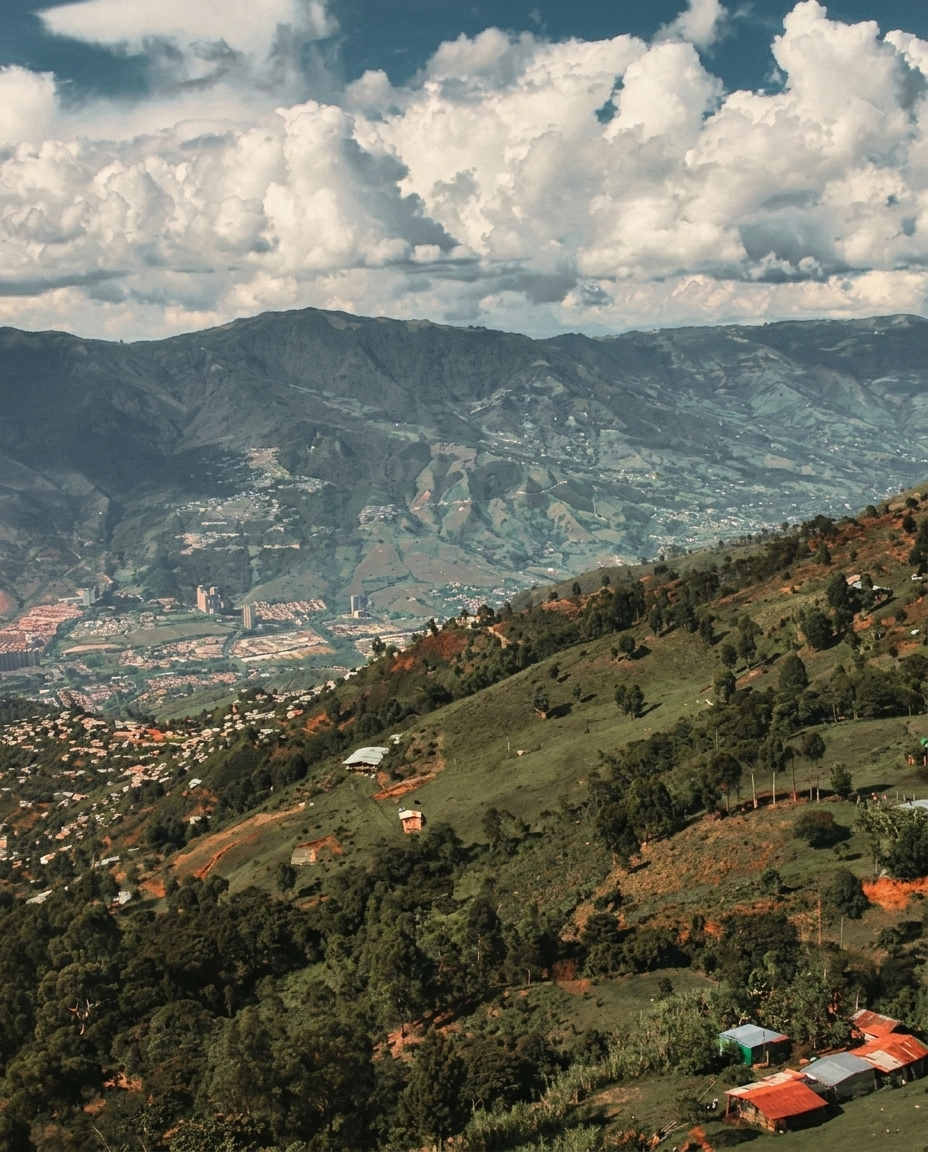
Envigado
A separate town on the valley's south edge: quieter, family-paced, and genuinely paisa, with real value for money.
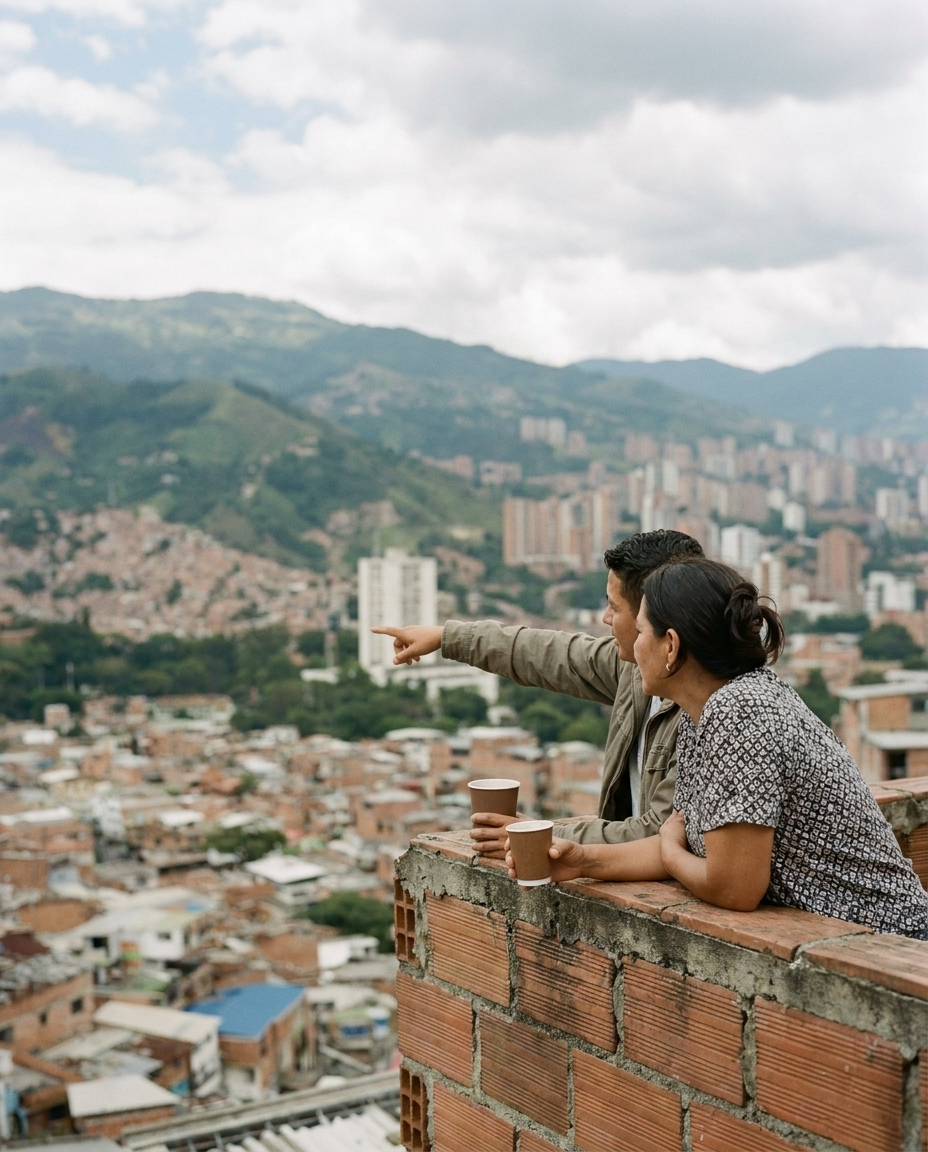
Laureles
Flat, leafy and unhurried: the local-feeling favorite for a longer stay, with tree-tunnel streets you can actually walk.
Not sure which area is you?
Tell Kathe your budget, your vibe, and how long you're staying, and she'll point you at the barrio that fits, from a verified local source rather than a forum thread.