Colombia Labor Reform: What It Means for Medellín Restaurants
Colombia's labor reform hits restaurants this July: a 90% Sunday surcharge and a 42-hour week are set to push Medellín menu prices up.
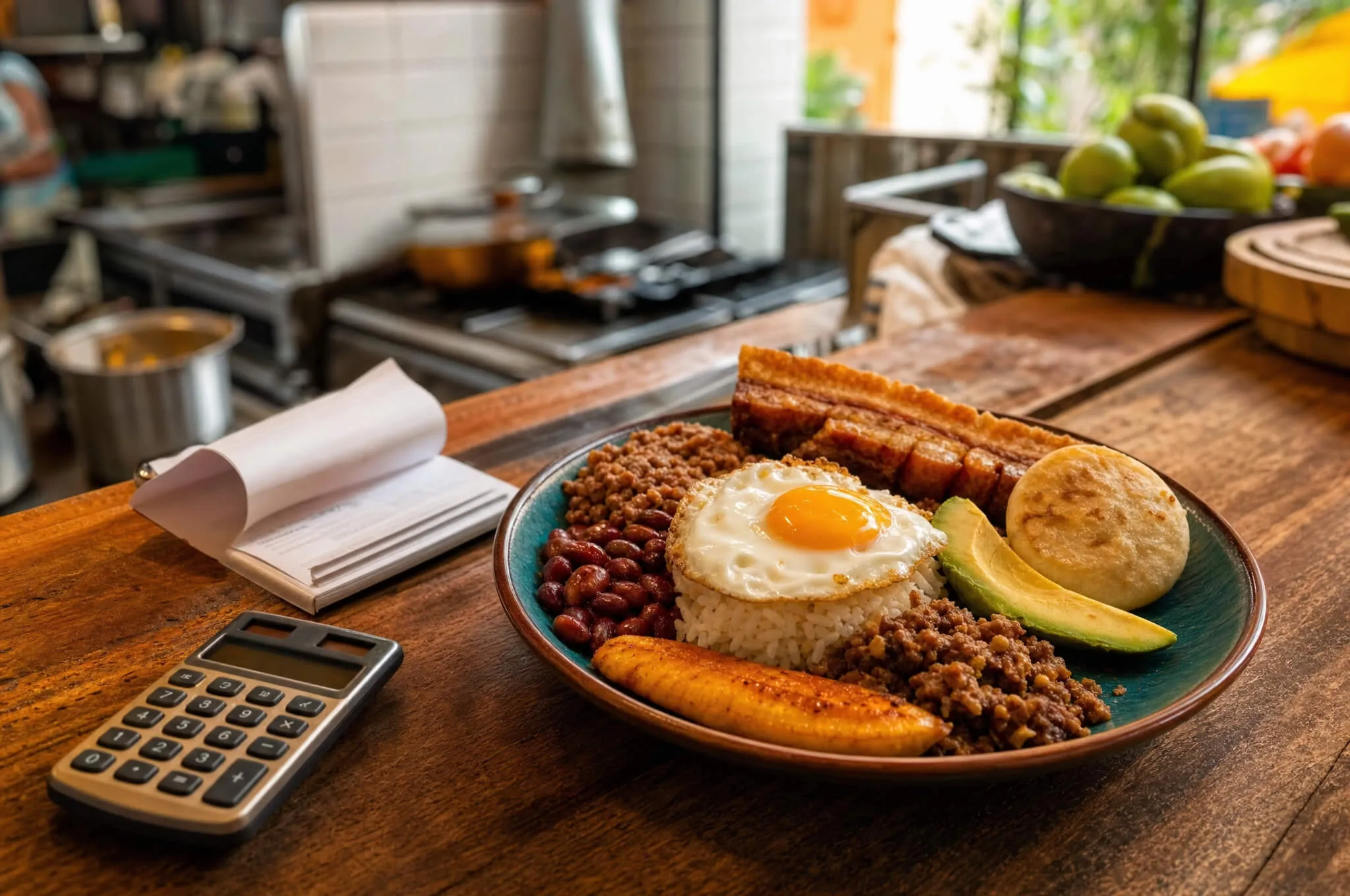
If you’re bracing for your favorite Medellín spot to get pricier, the industry’s own numbers say you’re reading the moment right. The short version: two separate labor reform changes are landing on Colombia’s restaurants in the same month — a 90% Sunday pay surcharge on July 1 and a 42-hour work week on July 15 — and the industry’s own trade groups say the math no longer works without price increases, shorter hours, or both.
The first change hit July 1: the Sunday and holiday pay surcharge (recargo dominical y festivo) rose to 90% of the base wage, up from 80% the year before, under the phased schedule set by Ley 2466 of 2025, the government’s 2025 labor reform. It climbs again to 100% in July 2027 (Portafolio). Colombia’s Labor Ministry says roughly 962,000 workers benefit directly from that jump, and restaurants and hotels are among the sectors most affected because weekend and holiday shifts are routine there (El Colombiano).
The second change lands July 15, but it comes from a different, older law: the maximum legal work week drops from 44 to 42 hours under Ley 2101 of 2021, a gradual reduction schedule set five years ago that simply reaches its final step this month — it is not part of the 2025 reform that raised the Sunday surcharge (Función Pública). The law states this shouldn’t cut anyone’s pay, but employers say the shorter week still raises effective labor costs per hour worked and complicates scheduling for round-the-clock kitchens and dining rooms (Infobae).
Why the Colombia labor reform has restaurants sounding the alarm
The Asociación Gastronómica de Colombia (Agacol) has asked the incoming government for tax relief, including a proposed ley gastronómica, to offset the combined hit from the Sunday surcharge and the shorter work week. The association expects many owners to shelve expansion plans — new locations and new hires — in favor of just reorganizing existing operations to absorb the added cost (Infobae).
The numbers behind that warning are stark. A January 2026 analysis by Acodrés Bogotá Región, one of the industry’s main trade associations, tracks three core cost lines — food, beverage and payroll — as a share of revenue. Combined, those three lines climb from 87% of revenue in 2025 to 109% in 2026, an operating loss of roughly 9% before rent, utilities, security, administration, or local taxes are even counted. That study predates both July changes. Acodrés attributes most of the 2026 jump to January’s minimum-wage increase and a separate alcohol-tax hike, not to the Sunday surcharge or the 42-hour week — so the 109% figure is the floor the July changes land on top of, not a measurement of them. Here’s how each of those three lines moved:
- Food costs: 35% → 43%, driven by higher input prices and the wage effect passed down from suppliers.
- Beverage costs: 27% → 36%, driven partly by a separate increase in alcohol taxes.
- Payroll (nómina): 25% → 30% from the minimum-wage increase and labor-reform recargos, on top of which the new Sunday surcharge and shorter work week will now layer additional cost through the rest of 2026 — see January’s minimum-wage increase for the wage-side context.
Figures: Acodrés Bogotá Región, via Portafolio — which independently reported the same cost-structure study as foodservice operators search for new formulas to offset rising costs and falling sales — and Ecos del Combeima.
What this means if you’re eating out in Medellín
To be clear about what’s reporting and what’s inference here: the cost-structure numbers above come from Acodrés Bogotá Región, and no Medellín-specific restaurant, owner, or price has been checked for this piece. But the surcharge and the 42-hour rule are national law — they apply exactly the same to a kitchen in El Poblado as one in Chapinero — and Medellín’s restaurant scene runs on the same weekend and holiday shifts that trigger the higher pay. So the same cost pressure is landing here, even without a local case study to point to yet. As of this July 2026 publish date, expect to notice it in a few concrete ways over the next few weeks:
- Weekend and holiday menu pricing. Some venues — including the kind of Sunday-brunch weekend spots in our guide to the best rooftop bars in El Poblado — may add a modest surcharge or adjust prices specifically for Sunday and festivo service rather than raising weekday prices across the board.
- Trimmed opening hours. A shorter legal work week makes it more expensive to staff late-night or early-morning shifts, so don’t be surprised if a spot that used to open at 7am now opens at 8, or closes its kitchen earlier on slow weeknights.
- Service charges holding steady or ticking up. The establishment-suggested propina voluntaria is capped at 10% of the bill and stays legally optional under Ley 1935 of 2018 (Función Pública); it’s already how many venues pad thin margins, so it’s one of the first levers owners are likely to lean on.
- Fewer new openings, for now. If a restaurant you’ve been hearing about keeps delaying its opening date, cost pressure — not construction delays — may be the real reason. It fits a pattern the city has already seen: even well-established spots like Bao Bei in Provenza have closed under rising costs, and Medellín’s broader restaurant-sector recovery is still fragile enough that added labor cost is unwelcome timing.
None of this means Medellín’s restaurant scene is shrinking overnight. But between higher weekend pay, a shorter work week, and a minimum-wage increase still working through supplier pricing, the sector’s own numbers point to real strain, and diners are likely to see it on the check before owners see any relief from Bogotá.
If you’re planning a night out despite the higher prices, our roundup of Feria de las Flores 2026 food events is a good starting point — just budget for the possibility that weekend and holiday pricing looks a little different than it did last year.
Frequently asked questions
Are restaurant prices going up in Medellín right now?
Not everywhere at once, but the pressure is real. Cost data from Acodrés Bogotá Región shows restaurant cost structures climbing from 87% of revenue in 2025 toward 109% in 2026, and Medellín kitchens face the same Sunday surcharge and shorter work week as the rest of the country, so weekend and holiday menu pricing is the place to watch first.
When does Colombia’s 42-hour work week start?
The maximum legal work week drops from 44 to 42 hours on July 15, 2026, under the phased schedule of Ley 2101 of 2021 — a separate, older law from the one that raised the Sunday surcharge. The law says this shouldn’t cut anyone’s pay, but employers say it raises effective labor cost per hour worked (Función Pública; Infobae).
How much is the Sunday and holiday pay surcharge now?
The recargo dominical y festivo rose to 90% of the base wage on July 1, 2026, up from 80% the year before, and is scheduled to climb to 100% in July 2027 (Portafolio).

Founder of Medellín.co — a long-time resident writing about living in and visiting the city, including regular coverage of the Colombian peso/dollar exchange rate and its effect on expat budgets.
Continue reading

Gasoline Price Medellín October 2026: $16,297, Then a Rollback
Gasoline price Medellín October 2026: regular rose 46 pesos to $16,297 a gallon on Oct. 1; the president ordered a reversal. What it means for drivers.
Colombia IMF Fiscal Crisis 2026: What It Means for the Peso
Colombia's IMF talks follow a widening 2026 fiscal gap. What they mean for the peso, Banrep's 12% rate and dollar-earner budgets in Medellín.

Colombian Peso to Dollar Exchange Rate Tops 3,200 (Aug 2026)
The Colombian peso to dollar exchange rate reversed hard in August 2026 — the dollar jumped above 3,200, changing what expats' dollars buy in Medellín.