Colombian Peso to Dollar Exchange Rate Tops 3,200 (Aug 2026)
The Colombian peso to dollar exchange rate reversed hard in August 2026 — the dollar jumped above 3,200, changing what expats' dollars buy in Medellín.

The Colombian peso to dollar exchange rate just did something it hadn’t done in weeks: it moved sharply against the peso. After sliding to an eight-year low earlier in August, Colombia’s official TRM (Tasa Representativa del Mercado, the country’s daily benchmark exchange rate) climbed from 3,048.12 COP/USD on Monday, August 24 to 3,144.28 on Friday, August 28 — a jump of 96.16 pesos, or roughly 3.15%, in a single week. The spot market traded above 3,200 by Friday’s close, according to El Colombiano and Infobae. For anyone earning dollars and spending pesos in Medellín, that’s a real — if partial — reversal of what had been a costly year.
Quick answer: Colombia’s official TRM for August 29–31, 2026 is COP 3,202.79 per US dollar — up 58.51 pesos, or 1.86%, from Friday’s TRM of 3,144.28, and up just over 5% from the August 24 TRM of 3,048.12, according to Colombia.com. That’s the highest TRM in more than three weeks, since August 5, 2026, per that same source — but the peso remains far stronger than it was for most of 2026, even after giving back roughly 5% this week.
Two different-looking numbers for the same week aren’t a typo: Colombia’s TRM is calculated from the previous business day’s interbank trading, which is why the TRM published for August 28 (3,144.28) sits below that day’s own spot-market close (3,202.77), and why the 3,202.79 TRM covering August 29–31 only catches up to where the spot market already was the previous business day (Friday, August 28).
The week’s COP/USD TRM, day by day
The dollar price in Colombia today looks very different from how it looked ten days ago:
| Date | Rate (COP/USD) | Change | Source |
|---|---|---|---|
| Aug 19 (Wed) | $3,039 (intraday low, spot) | Lowest level since Oct 2018 | Forbes Colombia |
| Aug 24 (Mon) | 3,048.12 (TRM) | Intraday low $3,028 at 8:25 a.m. (spot) — not seen since Oct 5, 2018 | Yahoo Noticias |
| Aug 28 (Fri) | 3,144.28 (TRM); $3,202.77 (spot close) | +96.16 vs Aug 24 TRM (+3.15%); fourth straight day of gains | El Colombiano |
| Aug 29–31 | 3,202.79 (TRM) | +58.51 vs Aug 28 TRM (+1.86%) | Colombia.com |
That August 19 dip — and what triggered it — is covered in more detail in our report on the eight-year low. The official record for every day in between sits with the Superintendencia Financiera’s certified TRM series and Banco de la República.
What’s driving the Colombian peso to dollar exchange rate this week
Analysts point to two forces working together. Locally, a liquidity indicator tracking dollar availability inside Colombia’s financial system moved into negative territory this week — in plain terms, fewer dollars circulating among local banks and brokers, which pushes the price up when demand doesn’t fall with it. That squeeze follows on the heels of Banco de la República’s dollar-purchase program, launched earlier in August specifically to pull dollars out of the market and rebuild reserves after the peso’s rally — one plausible contributor to why dollars got scarcer just as this week’s move happened. Globally, the US dollar has also been strengthening broadly against other currencies, adding outside pressure on top of the local squeeze, according to Infobae and El Colombiano.
That global dollar strength has a specific source: Federal Reserve Chair Kevin Warsh. Traders had been watching for his first Jackson Hole address as Fed chair, and he delivered it on Friday, August 28 — a hawkish reading of inflation that pushed the dollar higher worldwide. Warsh told the Jackson Hole Economic Policy Symposium that 12-month inflation was running at 3.7% by the Fed’s preferred measure, well above the 2% target, and warned that “we must be confident that underlying inflation is moving to our objective, clearly and at sufficient speed. Otherwise, we have work to do” — a line markets read as leaving the door open to a rate hike in the coming months, according to the Federal Reserve, the Washington Post, and CNBC. A hawkish Fed chair tends to strengthen the dollar broadly — which is exactly the outside pressure compounding Colombia’s local dollar squeeze this week.
El Colombiano reports that the analysts it cited do not consider this a structural change in the trend the dollar has shown over the past year. In that outlet’s own reporting (translated here from Spanish), its sources describe a short-lived microtrend that could run for roughly ten more days before the market reassesses — El Colombiano does not name the analyst or firm behind that estimate.
From an eight-year low to this rebound
This bounce doesn’t erase the bigger 2026 story. The peso has been among the best-performing emerging-market currencies of the year, appreciating from around 3,757 pesos per dollar in January to an eight-year high near 3,048 by late August — the strongest level since October 2018. Over that stretch the dollar fell roughly 19% against the peso; because percentage moves aren’t symmetric across a currency pair, the peso’s own appreciation over the same span works out closer to 23% in the other direction. Rio Times and other outlets have tracked the peso as 2026’s top-performing emerging-market currency, ahead of Hungary’s forint in second place. Even after this week’s jump, the dollar sits well below where it traded through most of 2026, so the underlying appreciation trend is still intact; this week is a correction within it, not a reversal of it.
What the exchange rate means for the Medellín cost of living
Run the math on a fixed peso expense — say, a COP 2,000,000 rent in Laureles or Envigado. At Monday’s TRM of 3,048.12, that rent cost a dollar earner about $656. At the TRM in effect August 29–31 (3,202.79), the same rent costs roughly $624 — about $32, or 5%, less in dollar terms in under a week. (Figures as of August 30, 2026; check the current TRM before wiring or budgeting, since this rate moves daily.)
Flip it around and the shift is just as visible: $1,000 wired from abroad bought about COP 3,048,120 at Monday’s TRM. The same $1,000 buys roughly COP 3,202,790 at the August 29–31 TRM — nearly COP 155,000 more, or about 5% more purchasing power in pesos, in under a week. That’s the flip side of the inflation squeeze we’ve been tracking in Medellín and the broader 2026 cost-of-living picture for expats: a stronger dollar doesn’t cancel out rising peso prices, but it does soften them for anyone converting from dollar income.
Is this the start of a bigger 2026 peso devaluation?
Too soon to say, and nobody serious is claiming otherwise. The consensus among the analysts cited by El Colombiano and Infobae is that this is a short-term correction tied to a dollar-liquidity squeeze and a firmer global dollar — not evidence the year-long peso rally has broken. Exchange rates in Colombia move by the day, sometimes by single-digit percentages within a week, exactly as they did between August 24 and August 28. Anyone wiring money, signing a lease, or comparing this month’s Medellín budget to last month’s should check the current TRM rather than plan around a number from even a few days ago — the Superintendencia Financiera’s TRM page and Banco de la República publish the official figures daily.
Frequently asked questions
Why did the peso weaken this week?
Two forces landed at once: a domestic dollar-liquidity squeeze (fewer dollars circulating among Colombian banks and brokers) and a broadly stronger US dollar worldwide, the latter driven largely by Fed Chair Kevin Warsh’s hawkish August 28 Jackson Hole remarks on inflation. Neither, according to the analysts El Colombiano and Infobae cited, signals a structural reversal of 2026’s peso rally.
What TRM should I use for a wire transfer or rent budget?
Always the most recent official TRM, not a figure from this or any other article. The Superintendencia Financiera and Banco de la República publish it daily, and it can move several percentage points within a single week — as it just did between August 24 and August 29.

Founder of Medellín.co — a long-time resident writing about living in and visiting the city, including regular coverage of the Colombian peso/dollar exchange rate and its effect on expat budgets.
Continue reading

Dollar to Colombian Peso Exchange Rate Hits 7-Year Low
The dollar to Colombian peso exchange rate broke 3,100 on July 30, 2026 — a 7-year low. What it means for US income in Medellín.
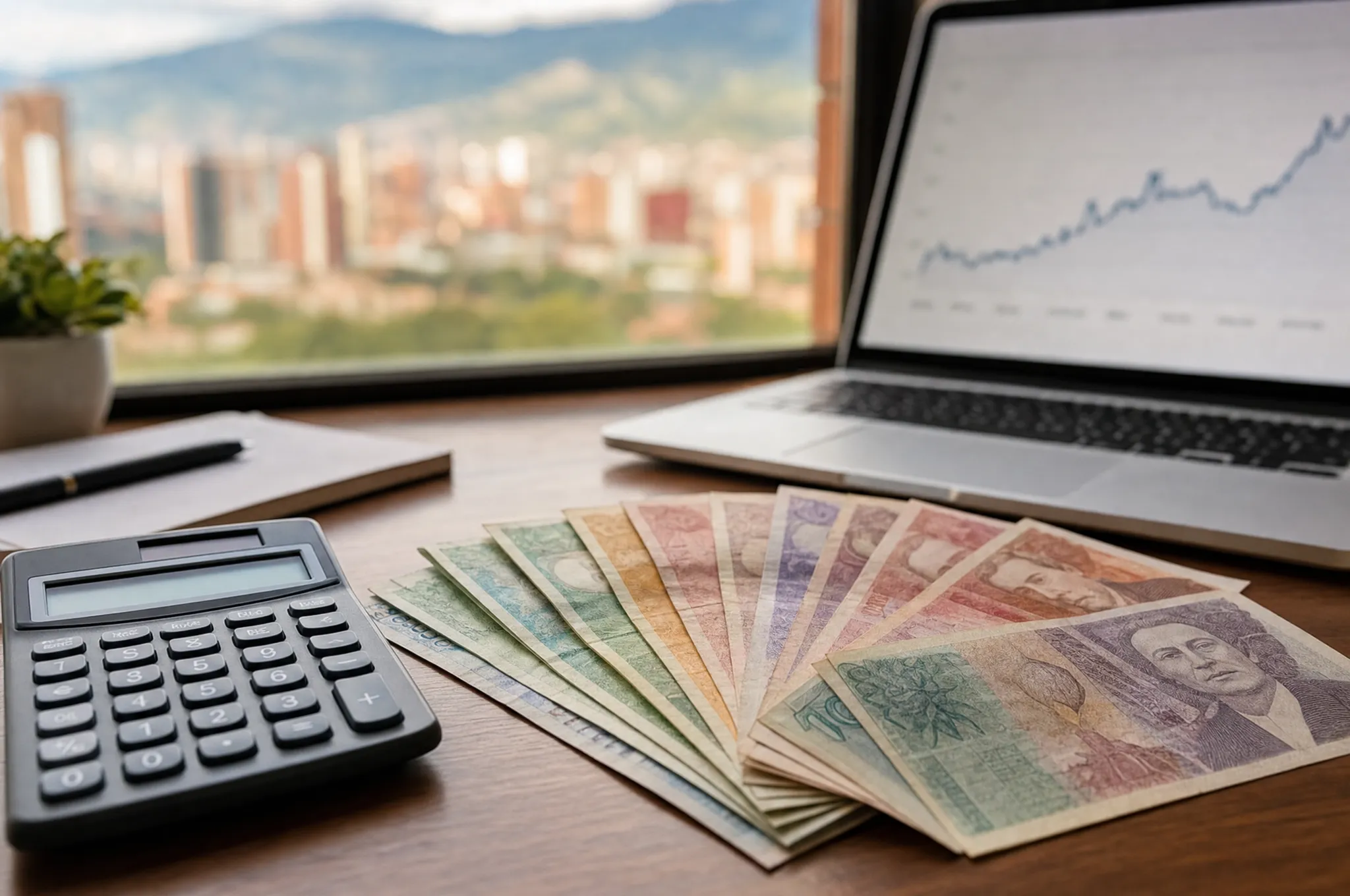
Colombian Peso Dollar Exchange Rate 2026: Your Money Buys Less in Medellín
The colombian peso dollar exchange rate 2026 hit a decade high in July — what the falling TRM means for US expats budgeting in Medellín.

Dollar to Colombian Peso Exchange Rate: Lowest Since 2018
The dollar to Colombian peso exchange rate hit COP 3,053.48 on August 20, 2026 — the lowest since 2018. What it means for expat budgets in Medellín.