Pico y Placa Medellín 2026: New Rotation From August 3
Pico y Placa Medellin 2026 gets a new plate rotation August 3 — days, hours, fines, and what it means if you drive or rent a car.
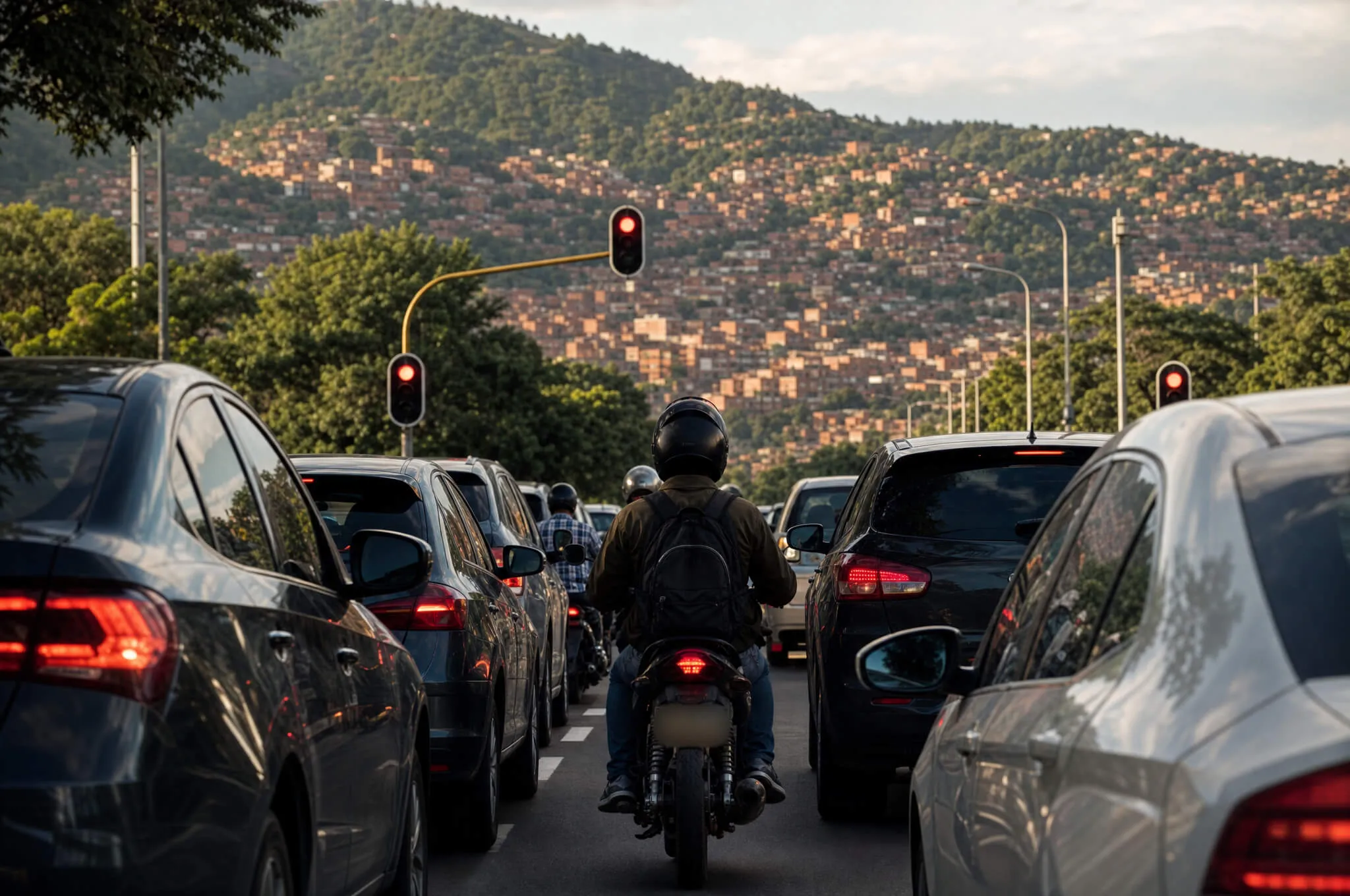
Medellín’s pico y placa rules reset for the second half of 2026 starting Monday, August 3, with a new plate-digit rotation, and this time it applies to both cars and motorcycles. If you drive here — or you’re renting a car for a trip — the new table takes effect immediately, and the grace period is short.
Pico y Placa Medellín 2026: the new rotation
Starting August 3, the restriction runs Monday through Friday, 5:00 a.m. to 8:00 p.m., and rotates by the last digit of a car’s plate:
| Day | Restricted digits |
|---|---|
| Monday | 5, 8 |
| Tuesday | 1, 4 |
| Wednesday | 0, 2 |
| Thursday | 3, 6 |
| Friday | 7, 9 |
This schedule was confirmed by Medellín’s city hall in its own press release and matches the rotation reported by El Tiempo and Infobae. It governs the entire Aburrá Valley — Medellín, Envigado, Itagüí, Sabaneta, Bello, and the other Metro-area municipalities that coordinate the measure — and stays in force for the rest of the second semester of 2026.
Motorcycles are restricted too, but by a different rule: it’s the first digit of the plate, not the last, that determines a moto’s restricted day, following the same weekly table above — a moto plate starting in 5 or 8 sits out Monday, 1 or 4 sits out Tuesday, and so on down the same digit pairs (Infobae). That distinction matters in a city where motorcycles make up roughly 60% of the registered vehicle fleet (El Colombiano) and are already the largest factor in Medellín’s rising traffic-death toll.
In plain text in case the table above doesn’t render: for cars, the restricted last digit is 5 and 8 on Monday, 1 and 4 on Tuesday, 0 and 2 on Wednesday, 3 and 6 on Thursday, 7 and 9 on Friday. For motorcycles, the same digit pairs apply to the plate’s first digit instead of the last.
The grace period ends fast — full fines from August 10
The city is running a short pedagogical phase from August 3 through August 6: officers can still stop and warn violators, but the economic sanction doesn’t apply yet (taxis are the one exception — they’re fined from day one). From Monday, August 10, 2026, enforcement becomes fully sanctioning, with no more warnings (Alcaldía de Medellín; El Tiempo).
Notice the pedagogical window runs Monday through Thursday — August 3 to 6 — rather than through the following Friday. That’s because pico y placa does not apply on Saturdays, Sundays, or public holidays in the first place, and Friday, August 7, 2026 is a national holiday: Batalla de Boyacá, one of the fixed-date holidays that always falls on August 7 regardless of the day of the week (El País). There’s simply no restriction to warn anyone about that day, so enforcement effectively picks back up the following Monday, August 10.
How much is the pico y placa fine in Colombia?
The fine for driving on a restricted day is set by law at 15 daily minimum legal wages (15 SMDLV) — a formula, not a fixed peso figure, so it moves every January when the minimum wage is set by decree (El Tiempo; Infobae). The math for 2026:
- Monthly minimum wage: COP 1,750,905
- Daily minimum wage (SMDLV): COP 58,363.50
- Fine (15 × SMDLV): roughly COP 875,450
That figure is less settled than it looks. The COP 1,750,905 wage was originally fixed by Decreto 1469 of 2025, but Colombia’s Consejo de Estado provisionally suspended that decree on February 12, 2026, ruling it may have skipped legally required criteria under Law 278 of 1996, and ordered the government to issue a new decree within days (Holland & Knight; Consultorsalud). The government’s response, Decreto 0159 of February 19, 2026, re-fixed the wage transitorily at the same COP 1,750,905 figure while the underlying case is still being litigated on the merits. In practice that means the 2026 SMDLV — and therefore the roughly COP 875,450 pico y placa fine — is what’s currently in force, but it isn’t fully closed litigation the way an ordinary annual wage decree would be.
At Banco de la República’s TRM of COP 3,144.14 per dollar on August 1, 2026, that’s about US $278 — but the peso has been unusually strong this year, so don’t budget off a fixed dollar figure; convert at whatever the rate is on the day.
On top of the fine, traffic authorities can impound the vehicle, which adds towing and impound-lot storage fees on top of the comparendo itself (El Tiempo).
Does pico y placa apply to rental cars and tourists?
Yes. Pico y placa applies by license plate, not by who owns or is driving the car, so a rental car — including one rented by a foreign tourist — is restricted on exactly the same schedule as a private vehicle (El Tiempo), and the city’s network of license-plate-reading cameras flags restricted plates automatically rather than relying on officers spotting cars in traffic (LaFM). “I didn’t know” isn’t a defense against the fine. If you’re renting for a trip, ask the agency for the plate’s last digit before you commit to a pickup date, since it varies car to car.
Which vehicles and roads are exempt
Vehicle exemptions (within Medellín):
- 100% electric vehicles, gas-converted vehicles, and hybrids, provided the fuel type is registered on the vehicle’s RUNT license, are fully exempt from pico y placa (Alcaldía de Medellín). A hybrid badge alone isn’t enough without the RUNT paperwork behind it — Medellín’s Secretaría de Movilidad handles the registration.
- Taxis run on a separate biweekly rotation (roughly one restricted day every two weeks, counting business days only) rather than the daily table above, and have no exempt corridors of their own (Alcaldía de Medellín).
Exempt corridors (Medellín jurisdiction only — see the caveat below for neighboring municipalities). These roads stay open to all plates regardless of the daily restriction (Alcaldía de Medellín; El Colombiano):
- Avenida Regional and the Autopista Sur (Medellín’s stretch, plus the section that continues into Itagüí’s jurisdiction)
- Vía Las Palmas and vía 4.1 toward western Antioquia (“vía a Occidente”)
- The Avenida 33 connection between the Autopista Sur and Las Palmas
- Calle 10 between the río Medellín corridor and the Terminal del Sur
- The access routes that serve the Terminal del Norte: carrera 64A (collector lane) between calles 75B and 88, calle 78 between Avenida Regional and carrera 64C, carrera 64C between calles 78 and 88, and calle 88 between carreras 64C and 64A
- Medellín’s five corregimientos (rural districts), which sit outside the restriction entirely
This exemption list is specific to Medellín — it doesn’t carry over to the rest of the Aburrá Valley. Envigado runs its own, shorter list: Avenida Regional, Loma del Escobero, Transversal de la Montaña, and vía Las Palmas (Alcaldía de Envigado). Itagüí has no exempt corridors of its own within the pico y placa decree, though its mayor separately lifted the restriction entirely on the Autopista Sur stretch inside Itagüí, effective January 28, 2026 (El Colombiano). If you regularly cross between municipalities — Poblado to Envigado, say — don’t assume a Medellín exemption protects you once you cross the line.
What this means if you drive in Medellín
For anyone renting, buying, or regularly driving a car or motorcycle in the Aburrá Valley, the next week is the one to get right: note your plate’s restricted day from the table above, treat the August 3-6 window as practice rather than a free pass, and expect real fines from August 10 onward. If you’re new to driving here altogether, pair this with a look at Colombia’s broader licensing and road rules for foreigners before you get behind the wheel.
Frequently asked questions
Does pico y placa apply on weekends and holidays?
No. The restriction only runs Monday through Friday, 5:00 a.m. to 8:00 p.m. It does not apply on Saturdays, Sundays, or public holidays — which is why Friday, August 7, 2026 (the Batalla de Boyacá holiday) has no restriction at all.
How does the motorcycle rule differ from the car rule?
Cars are restricted by the last digit of their plate; motorcycles are restricted by the first digit, using the same Monday-through-Friday digit pairs (5&8, 1&4, 0&2, 3&6, 7&9).
Are electric and hybrid cars exempt from pico y placa?
Yes, within Medellín — 100% electric vehicles, gas-converted vehicles, and hybrids are exempt, but only if that fuel type is registered on the vehicle’s RUNT license. A hybrid badge alone doesn’t qualify without the RUNT paperwork.
Does pico y placa apply to a rental car?
Yes. The restriction is tied to the license plate, so a rental car follows the same schedule as any privately owned vehicle in Medellín — though exempt corridors and the taxi rotation differ once you cross into Envigado, Itagüí, or another Aburrá Valley municipality.

Founder of Medellín.co — a long-time resident writing about living in and visiting the city, including regular coverage of the Colombian peso/dollar exchange rate and its effect on expat budgets.
Continue reading

Parques del Río Closures Medellín: Aug 25–Sep 14, 2026
Parques del Río closures in Medellín run Aug 25–Sep 14, 2026: phased lane work on the Regional/Autopista Sur underpass, explained.

Medellín Air Quality Watch: Oct 13–24, 2026 Episode
Medellín air quality is under a second 2026 watch, Oct 13–24. See SIATA readings, what could trigger restrictions, and how to protect yourself.

Colombia Traffic Fines Reduction 2026: The 50% Cut Bill
Colombia traffic fines reduction 2026: a new bill would cut comparendos up to 50% and overhaul fotomultas. What it means for drivers in Medellín.