Migración Colombia Denies Entry at Medellín Airport
Migración Colombia denied entry to a 'Passport Bros' influencer at Medellín's airport July 31 — 107 turned away across Antioquia in 2026, as of Aug. 1.
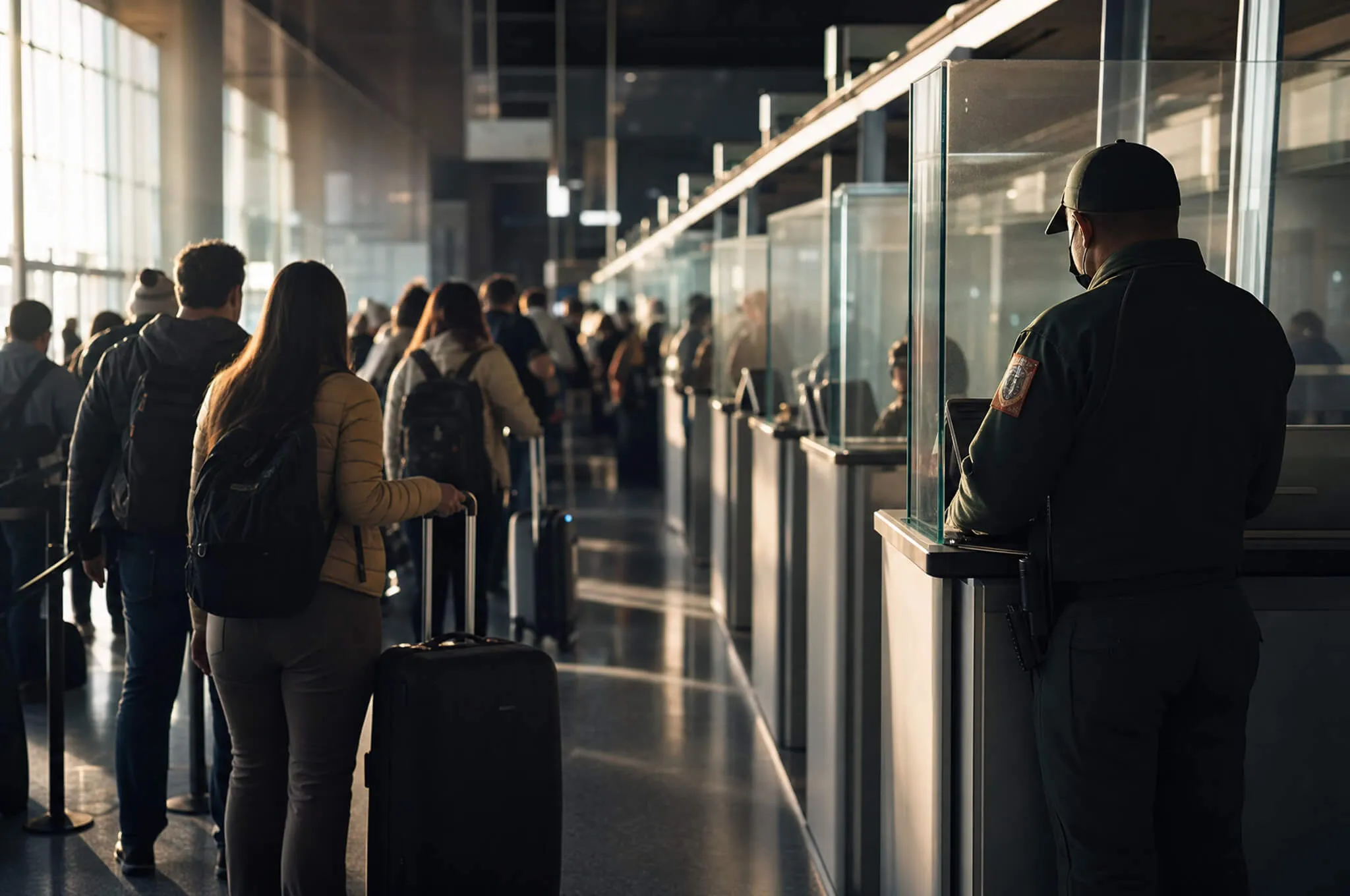
Figures current as of August 1, 2026, and running year-to-date — expect these totals to keep climbing.
Quick answer: Migración Colombia denied entry to a US citizen identified as a promoter of the “Passport Bros” movement at Medellín’s José María Córdova airport on July 31, 2026, plus three more US citizens the same Friday on suspected sex-tourism grounds. As of August 1, 2026, the agency has denied entry to roughly 150 foreigners nationally in 2026, 107 of them in Antioquia department — home to Medellín’s airport — already ahead of the 80 recorded across the same department in all of 2025.
Who Migración Colombia turned away, and why
A US citizen identified by El Tiempo as going by “Don P Sounds” on Instagram — a spelling not independently confirmed in English-language coverage — and described by officials as a creator and promoter of the informal “Passport Bros” movement was intercepted at José María Córdova International Airport in Rionegro on July 31, 2026, after arriving on a Copa Airlines flight from the United States, according to El Tiempo. No criminal charge has been filed against him in Colombia — the inadmission is Migración Colombia’s administrative allegation, not a conviction. Migración Colombia said it issued the inadmission order before he landed, after intelligence work tied him to promoting tourism for sexual-exploitation purposes through digital platforms and social media (Migración Colombia; El Tiempo). He was put on the next available flight back.
“Passport Bros” is a loosely organized online movement, mostly American men, that frames travel to cities like Medellín around finding romantic or marital relationships with foreign women. Colombian authorities say their intelligence review of this particular account found it crossing into promotion of sexual-exploitation tourism, which is what triggered the inadmission rather than the travel movement itself (LaFM).
Paola Salazar, Migración Colombia’s regional director for Antioquia and Chocó, said the decision followed prior intelligence work rather than a spot check at the counter (LaFM). Agency director Gloria Esperanza Arriero put it more bluntly: “Colombia no abrirá sus puertas a quienes pretendan convertir a nuestras mujeres, niñas, niños y adolescentes en un atractivo para el turismo sexual” — Colombia will not open its doors to those who intend to turn our women, girls, boys, and adolescents into an attraction for sex tourism (El Tiempo).
Three more Americans turned back the same Friday
Migración Colombia also inadmitted three other US citizens on July 31, 2026, for suspected sex tourism. One traveler consented to a baggage search, and officers reported finding unusually large quantities of condoms and other sexual items inside (El Tiempo). None of the four cases involved a criminal charge in Colombia — an inadmisión is an administrative border decision, not a prosecution, and under Ley 2136 de 2021 (Art. 17) it carries no right of appeal.
Inadmisión, not expulsión: resolving a headline mismatch
The El Tiempo headline on this story reads “expulsó a cuatro estadounidenses” — Spanish news shorthand for “sent back four Americans” — which reads, in English, like Colombia’s separate legal category of expulsión. It isn’t. The article’s own body text says Migración Colombia “inadmitió… a otros tres ciudadanos estadounidenses” — inadmitted three other US citizens — meaning all four Americans that Friday, including the Passport Bros case, went through the same inadmisión process: stopped at the border before formally entering the country, with no criminal charge filed. Under Ley 2136 de 2021 (Art. 7), expulsión and deportación are distinct actions, defined separately from inadmisión, that apply only to someone already inside Colombia in irregular status or who has committed a violation there; unlike inadmisión, both can carry a re-entry ban set under the law’s implementing regulations — neither applies to any of the four July 31 cases.
This is the same enforcement track we covered when six Americans carrying tipping cash were turned back on July 13, and it’s running alongside Task Force Medellín 2026, the joint FBI–HSI–Migración Colombia operation screening arrivals through August 10 for the length of Feria de las Flores.
Migración Colombia’s denied-entry count at Medellín airport keeps climbing
Migración Colombia’s count, as of August 1, 2026, puts the national inadmission total for sexual-exploitation-tourism indicators at roughly 150 for 2026, with 107 of those in Antioquia department — roughly 70% of the national figure concentrated in one department (LaFM; El Tiempo). That 107 is already ahead of the 80 inadmissions Migración Colombia logged across Antioquia in all of 2025 — a figure both El Tiempo and El Colombiano scope the same way, to the department as a whole. Nationally, the roughly 150 recorded so far in 2026 is already past the 110 recorded in all of 2025, per El Colombiano.
Inadmissions for sexual-exploitation-tourism indicators, Antioquia department versus nationwide:
| Antioquia department | National | |
|---|---|---|
| 2025 (full year) | 80 | 110 |
| 2026 (year-to-date, as of Aug 1) | 107 | ~150 |
Both Antioquia rows are department-wide totals, not José María Córdova airport-only counts.
The pace has been climbing all summer, though each snapshot’s scope differs: 101 across Antioquia department as of July 13, 105 at José María Córdova airport specifically by late July, and 107 across Antioquia department as of this article. Read the like-for-like comparison as 101 to 107 — a department-wide increase of six inadmissions in under three weeks — rather than measuring either figure against the 105 airport-only count. Officials describe the broader increase as sharper screening rather than a surge in intent — Angel Watch database checks, Interpol alerts, and migratory-interview inconsistencies all show up in the cases on record below.
That layered approach is also behind two other named cases this year: “Chill Capo,” deported in April with a five-year re-entry ban, and “Casey Red Beard,” inadmitted in Bogotá in May (El Colombiano).
What actually triggers a sex-tourism screening flag
Colombian and US officials describe the screening behind these numbers as layered, not a single database check. Based on the cases reported so far in 2026, four things can flag a traveler at José María Córdova:
- An Angel Watch hit — a US Homeland Security Investigations program that cross-references outbound flight manifests against US sex-offender registries and alerts Colombia before the flight lands (ICE’s Angel Watch Center).
- An Interpol alert tied to a prior sexual-offense record, cross-checked alongside Angel Watch data as part of the same layered screening (Infobae).
- A migratory interview inconsistency — answers about the trip’s purpose that don’t line up with the traveler’s itinerary, social-media activity, or online promotion; officials say the July 31 cases were detected this way, alongside checkpoint verification (El Tiempo).
- Baggage contents flagged during a search the traveler consents to, as in one of the July 31 cases here.
For the fuller mechanics of how Angel Watch and Interpol data are layered together at the counter, see our explainer on Task Force Medellín 2026’s screening operation. What happens after a flag is consistent across the cases on record: the traveler is put on the next available return flight, typically within hours, with no criminal charge filed in Colombia. An inadmisión carries no automatic re-entry ban under Ley 2136 de 2021 — unlike deportación or expulsión — but anyone flagged once through Angel Watch or a prior record should expect the same screening to catch them again on a future attempt.
What this means for travelers
None of this changes the ordinary entry process for the vast majority of US visitors flying into José María Córdova for tourism, remote work, or a move to Medellín — this screening is calibrated specifically to intelligence flags and interview red flags tied to sexual-exploitation tourism, not to routine arrivals. If you’re weighing the broader safety picture before a trip, our rundown of the US Embassy’s July 2026 warning on drugging and robbery risks in Medellín covers the other side of that conversation. Expect Migración Colombia’s 2026 count to keep rising through year-end, with Feria de las Flores traffic and Task Force Medellín 2026’s screening both still running through August 10.
Frequently asked questions
Can a Migración Colombia inadmisión be appealed?
No. Under Ley 2136 de 2021, Article 17, an inadmisión is issued on the spot at the border and no appeal applies — “contra esta decisión no proceden recursos.” The airline is required to fly the traveler back, typically the same day.
Was this an inadmisión, an expulsión, or a deportación?
All four Americans denied entry on July 31, 2026 — including the Passport Bros case — went through inadmisión, the category applied to someone stopped before formally entering Colombia. Expulsión and deportación are separate legal actions under Ley 2136 de 2021, Article 7, that apply only to someone already inside the country; unlike inadmisión, both can carry a re-entry ban under the law’s implementing regulations, but neither applies here.
What happens after Migración Colombia denied entry at Medellín airport?
The traveler is placed on the next available return flight, typically the same day — the airline is required to fly them back — with no Colombian criminal charge filed; an inadmisión is an administrative border decision, not a prosecution. Because it carries no fixed re-entry ban, a future entry attempt is possible, though anyone flagged once through Angel Watch or a prior record should expect the same screening to catch them again.
Does this affect ordinary tourists or digital nomads flying into Medellín?
No. The screening described here is calibrated to intelligence flags and interview red flags tied to sexual-exploitation tourism, not to routine tourism, remote work, or relocation. The overwhelming majority of US visitors to José María Córdova pass through unaffected, including the digital nomads and remote workers who make up a large share of arrivals.

Founder of Medellín.co — a long-time resident writing about living in and visiting the city, including regular coverage of the Colombian peso/dollar exchange rate and its effect on expat budgets.
Continue reading

Americans Denied Entry at Medellín Airport: 120 in 2026
Migración Colombia turned back five more Americans denied entry at Medellín's airport Sept. 3, pushing Antioquia's 2026 total to 120.

Medellín Foreigners Arrested for Sex Crimes: 28 of 35 US
35 foreigners arrested for sex crimes in Medellín since 2024, 28 of them American — a rise El Colombiano puts at 1,000%+, though raw counts show ~400%.
Medellín's FBI Task Force for Feria de las Flores 2026
Medellín's Task Force 2026 pairs the FBI, HSI, and Interpol with local police to screen arrivals for Feria de las Flores — what it means for visitors.