Medellín's FBI Task Force for Feria de las Flores 2026
Medellín's Task Force 2026 pairs the FBI, HSI, and Interpol with local police to screen arrivals for Feria de las Flores — what it means for visitors.
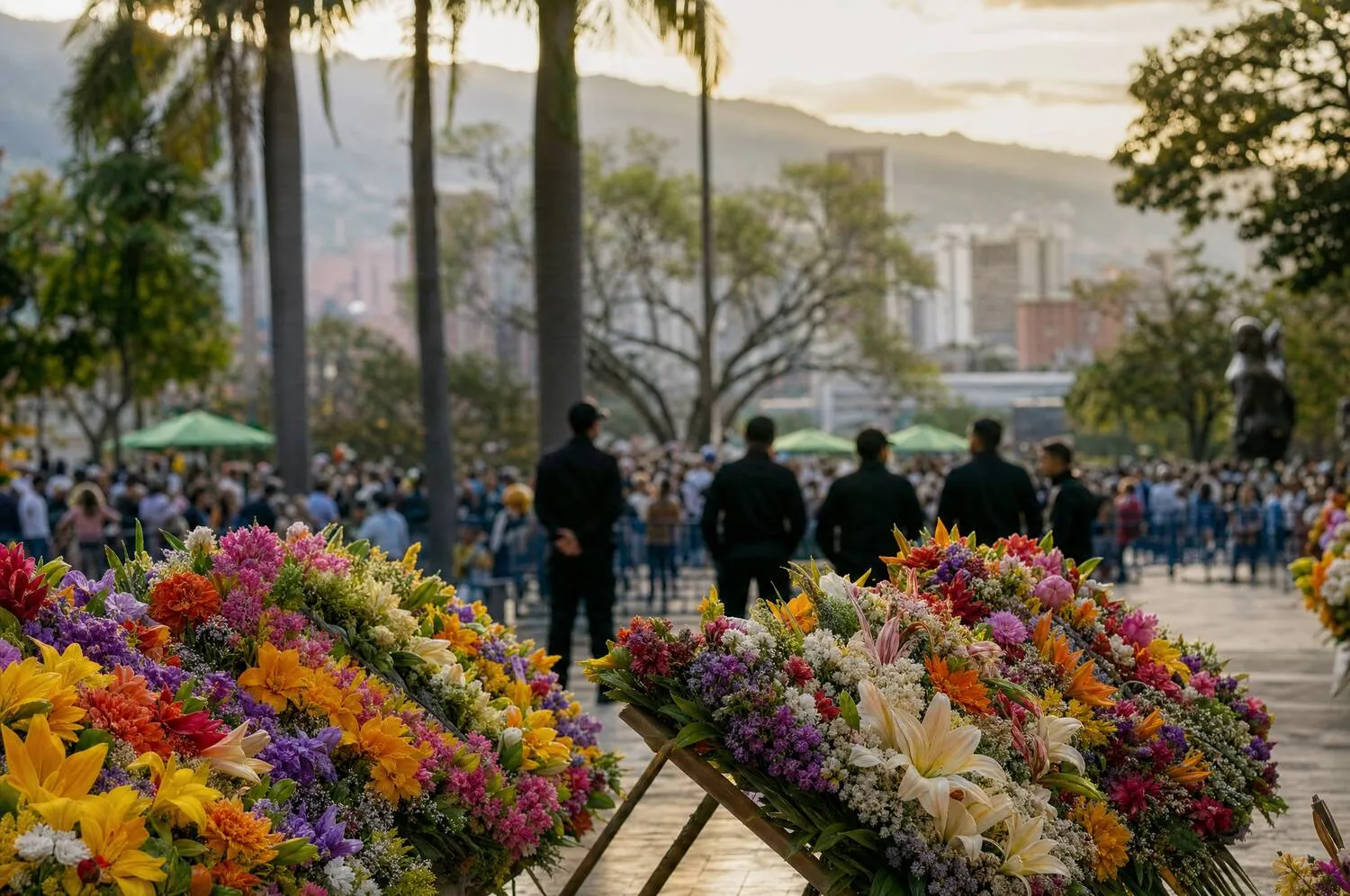
Figures current as of July 30, 2026, and running year-to-date — expect the totals below to keep climbing.
Quick answer: Mayor Federico Gutiérrez announced Task Force Medellín 2026 on July 27, 2026, a joint operation with the FBI, Homeland Security Investigations (HSI), the US Marshals Service, Interpol, and Migración Colombia that operates July 28 through August 10 to screen arrivals for suspected child sexual exploitation and sex tourism during Colombiamoda and the Feria de las Flores. As of late July 2026, officials say 216 foreigners have been denied entry at José María Córdova airport since 2024 under this category — 105 of them in 2026 alone — and 34 people were arrested for abuse or exploitation between 2024 and 2026, versus three in 2021–2023.
What is Medellín’s FBI task force for Feria de las Flores 2026?
The task force pairs the US Department of Justice, FBI, HSI, and US Marshals with Interpol, Migración Colombia, Medellín’s National Police, and the city’s own security secretariat — an operation Mayor Gutiérrez announced on July 27, 2026, operating July 28 through August 10 — a window covering both Colombiamoda (July 28–31) and the Feria de las Flores (July 31–August 9), according to El Espectador and El Colombiano.
Its core function is real-time background screening of international passengers landing at José María Córdova, cross-checking arrivals against the Angel Watch database (a US Homeland Security Investigations program that flags travelers with sex-offender records to the destination country before they land) and Interpol alerts before travelers reach the immigration counter. “When someone with a record of pedophilia or sexual assault arrives on an international flight, their background is verified immediately, they are approached, and they are denied entry,” Mayor Gutiérrez said (translated from Spanish), per Infobae’s report on how the task force operates.
How the Angel Watch screening works
The program cross-references outbound flight manifests against US sex-offender registries and notifies the destination country before the traveler’s plane lands, per ICE’s Angel Watch Center. Task Force Medellín 2026 layers that feed together with Interpol alerts so a flagged arrival can be verified and stopped at the counter, rather than after the person has already cleared immigration, per Infobae. The screening itself isn’t new — Medellín has been checking arrivals against Angel Watch data since 2024 — but this year’s task force puts FBI and HSI personnel to work on the data directly alongside Migración Colombia at the airport for the duration of the fair.
Hotel and short-term rental inspections
Screening at the airport only catches cases that move through immigration. Beyond José María Córdova, authorities are also inspecting hotels and short-term rentals across the city for unauthorized occupants — a parallel check aimed at cases that never touch a passport counter, El Tiempo reports.
Drones, license plates, and boots on the ground
The broader security footprint is heavier than a typical week regardless: more than 3,190 National Police officers, 250 soldiers, and hundreds of city staff are deployed across roughly 165 public and private events tied to the fair, backed by a police helicopter, surveillance drones, and license-plate recognition cameras across high-tourism zones like Santa Elena, Parques del Río, and Pueblito Paisa, per El Tiempo.
The numbers behind the crackdown
The city’s screening data, cited across multiple outlets and current as of late July 2026, breaks down like this:
- 216 foreigners denied entry at José María Córdova since 2024 for risk factors tied to sexual exploitation tourism — 105 of those in 2026 alone, as of late July — already ahead of the 80 recorded across all of Antioquia in 2025 (El Colombiano) — a department-wide total, so the city-only figure alone now exceeds it — and nearly triple the 40 recorded across all of 2021–2023 combined (El Colombiano; LaFM).
- 34 arrests for abuse or exploitation between 2024 and 2026, versus 3 in 2021–2023 — over a 1,000% increase, as of the same late-July 2026 count.
- 12 convictions to date, including two life sentences handed down in US federal courts, per Infobae’s reporting.
Those 2026 figures track with what we reported after six US citizens carrying tipping cash were turned back at the airport on July 13. That report put the year’s Medellín total at 101 inadmissions at the time, already above the 80 recorded across all of Antioquia in 2025. The count climbing to 105 by late July shows the pace hasn’t slowed. The new task force adds FBI and HSI intelligence-sharing on top of the Angel Watch screening that was already driving those numbers.
Does the Medellín task force affect ordinary tourists?
No — not for the vast majority of visitors. Officials project 67,000 to 74,000 international air arrivals and 260,000 to 288,000 arrivals by land through Medellín’s airports and bus terminals during Colombiamoda and the Feria de las Flores — a crowd we sized up in our look at the fair’s tourism and spending projections — and none of this changes the ordinary entry process for that crowd. If you’re part of that crowd, our guide to Feria de las Flores food and drink events covers what’s worth showing up for.
The screening isn’t limited to a database hit. Officials describe it as combining Angel Watch and Interpol record checks with migratory interviews that probe a traveler’s stated purpose of visit and flag inconsistencies with their itinerary — the same approach that, in one case reported by Migración Colombia, unraveled two Americans who told officers they were in town for a bachelor party. That combination is how the six US citizens turned back on July 13 were caught, after officers found packets of tipping cash in their luggage rather than a flagged criminal record (our earlier report). Most arrivals still clear the counter in the usual few minutes; the added scrutiny falls on the profile the task force is built to catch, not on tourists, remote workers, or returning residents generally.
The security footprint described above — the extra police and soldiers, the drones, the hotel checks — dwarfs an ordinary week in the city regardless. Combined with the US Embassy’s own July 2026 warning about dating-app-related drugging and robbery in Medellín, the takeaway for visitors is the same one that applies most weeks in Medellín: ordinary caution, not alarm.
Frequently asked questions
What is Task Force Medellín 2026?
A joint US-Colombia operation — the FBI, HSI, the US Marshals Service, Interpol, and Migración Colombia working with Medellín’s National Police — screening international arrivals and inspecting hotels for suspected child sexual exploitation and sex tourism during Colombiamoda and the Feria de las Flores.
How long does the Medellín task force run?
Task Force Medellín 2026 runs from July 28 through August 10, 2026, covering both Colombiamoda (July 28–31) and the Feria de las Flores (July 31–August 9).
Will the FBI task force affect ordinary tourists visiting Medellín?
No. The screening is calibrated to flagged records, migratory interviews that probe stated travel purpose, and Interpol alerts tied to sexual exploitation tourism — not to routine tourism, remote work, or relocation. The overwhelming majority of visitors pass through unaffected.
The bottom line
Task Force Medellín 2026 is a US-Colombia intelligence-sharing operation, running July 28 through August 10, aimed squarely at sex offenders and exploitation networks trying to exploit the crowds of Feria de las Flores — not a new hurdle for the tens of thousands of legitimate visitors the city is counting on. The screening it’s built around has already flagged 105 people this year before the fair even started; expect that number, and the arrest count, to keep climbing as the task force runs through August 10. The Alcaldía’s announcement describes no extension past that date, so the dedicated FBI and HSI staffing tied to this specific task force likely winds down then. The underlying Angel Watch and Interpol screening was already running before the fair, though, and is expected to continue year-round — so the totals above should keep climbing, just without the same concentration of press coverage.

Founder of Medellín.co — a long-time resident writing about living in and visiting the city, including regular coverage of the Colombian peso/dollar exchange rate and its effect on expat budgets.
Continue reading

Americans Denied Entry at Medellín Airport: 120 in 2026
Migración Colombia turned back five more Americans denied entry at Medellín's airport Sept. 3, pushing Antioquia's 2026 total to 120.
Medellín Airport Denied Entry to 101 Foreigners in 2026
Medellín airport denied entry to 101 foreigners so far in 2026, already above all of 2025, after six Americans were turned back July 13.
Migración Colombia Denies Entry at Medellín Airport
Migración Colombia denied entry to a 'Passport Bros' influencer at Medellín's airport July 31 — 107 turned away across Antioquia in 2026, as of Aug. 1.