Is Medellín Safe in 2026? Traffic Deaths Pass Homicides
Is Medellin safe in 2026? Traffic deaths (151) have overtaken homicides (140) for the first time, and motorcycles are the real risk.
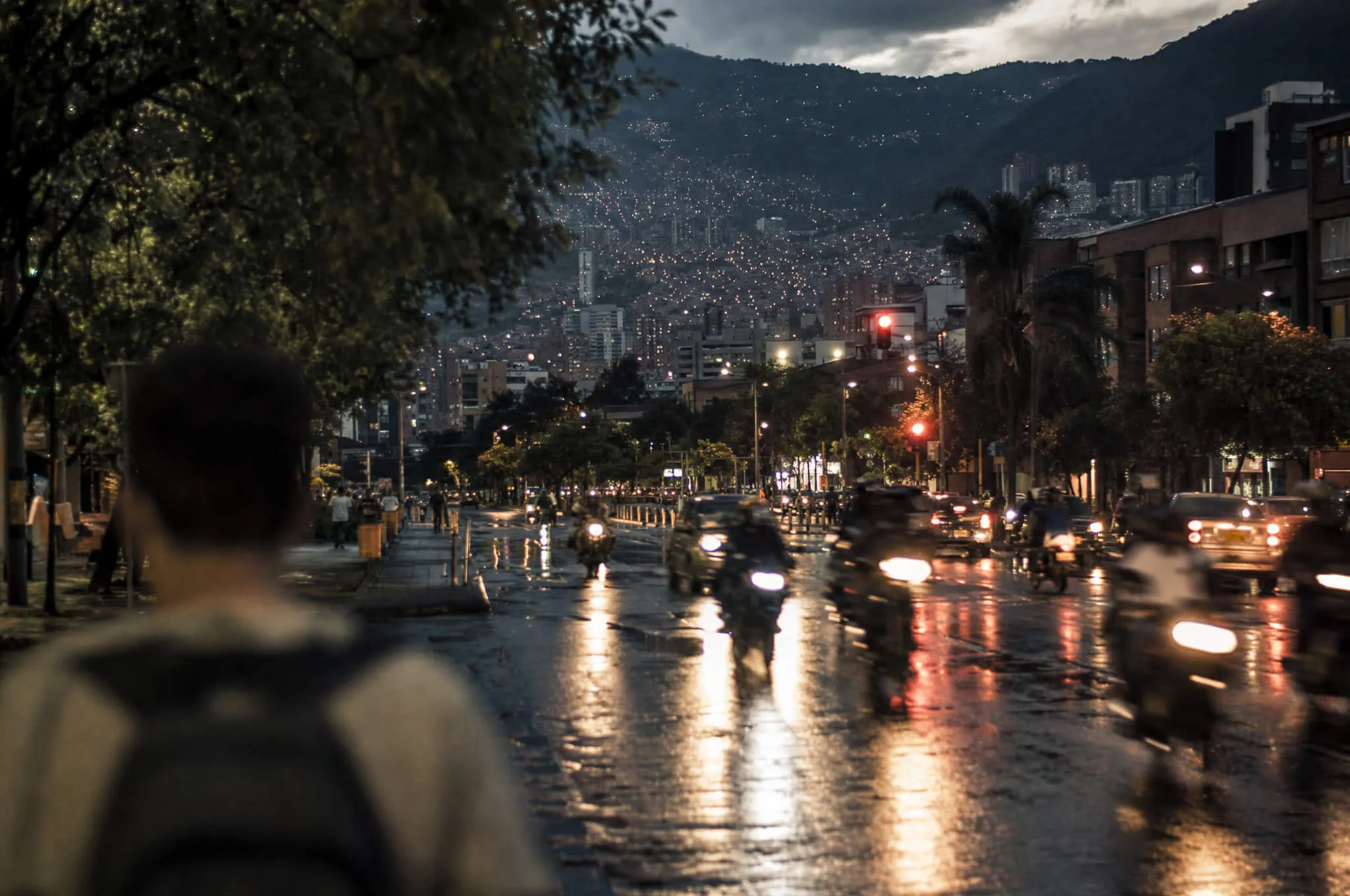
Is Medellín safe in 2026? The city’s own numbers just answered that question in a way nobody expected: for the first time on record, more people in Medellín have died in traffic than have been murdered. El Colombiano reported on July 13 that the city has logged 151 traffic deaths against 140 homicides so far this year — a milestone that flips the safety conversation most US readers assume they’re having (El Colombiano).
Figures current as of July 12, 2026. Both counts are running year-to-date totals that update continuously, so the 11-death gap between them can narrow, widen, or invert within weeks.
Is Medellín Safe in 2026? What the Numbers Actually Show
Through July 12, traffic deaths were up 6% year over year while homicides fell 23% over the same stretch — two lines crossing in opposite directions (El Colombiano). Motorcyclists account for 82 of the traffic deaths and pedestrians for another 61 — together, nearly all of the 151. Broken down by the type of crash, so far this year:
- Motorcycle vs. pedestrian: 28 deaths — the single deadliest interaction on Medellín’s roads
- Motorcycle vs. truck: 12 deaths
- Motorcycle vs. motorcycle: 11 deaths
- Motorcycle vs. fixed object: 11 deaths
(El Colombiano). It isn’t a one-year blip: Medellín closed all of 2025 with 276 road deaths, 162 of them motorcyclists and 100 pedestrians, the same pattern repeating at scale (El Colombiano).
Medellín motorcycle safety is the real story here
The reason motorcycles dominate the death toll isn’t mysterious — it’s fleet composition. Motorcycles now make up roughly 59.9% of the registered vehicle fleet in the Valle de Aburrá metro area as of the July 2026 data, versus 31.2% for cars, and that share has only grown as motos remain the cheapest way to beat Medellín’s traffic (El Colombiano). For context on how the city’s other major transit option compares, the Medellín Metro’s safety record stands in sharp contrast to what happens on the streets above it.
Homicides keep falling to modern lows
None of this erases real progress on violent crime. Medellín closed the first half of 2026 (through June 30) with 133 homicides citywide, down 20% from 166 in the same period of 2025, part of a broader 14% drop across the ten municipalities of the Valle de Aburrá metro area (195 versus 228 homicides) (El Tiempo). That 133 is the city’s official H1 close; the 140 figure at the top of this article runs 12 days further, through July 12, which accounts for the difference. February 2026 was the least violent month in the city’s records going back roughly 50 years — 11 homicides that month, including a 19-day stretch without a single violent death, a 13% drop from February 2025 — and the city’s Secretariat of Security now projects Medellín’s homicide rate closing out 2026 near a modern low of roughly 10 per 100,000 residents (Alcaldía de Medellín). It’s the continuation of a decline our 2022 homicide coverage first tracked years ago, now reaching a new floor.
What this means for expats, digital nomads, and visitors
The practical takeaway for anyone weighing a move or a trip: the danger most likely to touch a visitor in Medellín in 2026 isn’t a mugging, it’s traffic — specifically, a motorcycle. That’s exactly why the US State Department bars its own employees in Colombia from riding motorcycles, alongside restrictions on hailing street taxis and using public transit unescorted. Colombia overall still sits at a Level 3, “Reconsider Travel,” advisory as of the March 31, 2026 update, which cites crime, terrorism, civil unrest, kidnapping, and — newly added in that update — natural disasters as its stated drivers, not Medellín’s specific homicide trend (U.S. Department of State). Anyone reading up on the city’s crime history — including our own past coverage of how the US Embassy has responded to safety concerns for Americans in Medellín — should treat road safety with the same seriousness:
- Use painted crosswalks and don’t assume a moto will yield
- Avoid riding as a passenger on informal moto-taxis
- If you rent a motorcycle yourself, wear a real helmet, not a rented shell
- Expect Medellín’s hills, rain, and mixed traffic to be far less forgiving than they look
Beyond the numbers: what else affects safety in Medellín
Traffic and homicides are the two headline metrics, but they aren’t the whole safety picture for a visitor. Theft and scams remain the most common way tourists actually get hurt or lose money here, well ahead of violent crime: airport touts running fake-taxi schemes at Rionegro (our guide to avoiding airport taxi scams), pickpocketing at busy transit hubs like San Antonio station (what travelers need to know), and the general street-smarts locals sum up as “no dar papaya” — don’t make yourself an easy target (the full breakdown). Solo travelers, especially women, face a distinct set of considerations that a citywide homicide or traffic count doesn’t capture; see our solo women’s travel guide to Medellín for neighborhood- and situation-specific advice. And if you’re considering driving yourself rather than relying on rideshares or the metro, the licensing rules and insurance requirements are worth reading before you get behind the wheel (navigating Colombian roads as a foreigner).
Frequently asked questions
Is Medellín safe in 2026?
It depends which risk you’re measuring. By the homicide numbers, Medellín is safer than it’s been in decades — 140 homicides so far this year through July 12, part of a broader decline that saw the city close H1 2026 with 133, down 20% year over year. By the traffic numbers, it’s a different story: 151 road deaths over that same July 12 window, most involving motorcycles or pedestrians, now outnumber homicides for the first time on record (El Colombiano; El Tiempo).
Why are motorcycle deaths so high in Medellín?
Motorcycles are roughly 60% of the region’s vehicle fleet, and motorcycle-versus-pedestrian is the single deadliest type of crash recorded in the city this year (El Colombiano).
What’s the biggest safety risk for tourists in Medellín, if not crime or traffic?
Theft and scams — particularly airport taxi touts and pickpocketing on the metro — are the safety issues most likely to actually affect a short-term visitor, and both are avoidable with basic precautions (see the linked guides above).

Founder of Medellín.co — a long-time resident writing about living in and visiting the city, including regular coverage of the Colombian peso/dollar exchange rate and its effect on expat budgets.
Continue reading
American Killed in Laureles Medellín Hotel: What We Know
An American killed in a Laureles, Medellín hotel: authorities call it a homicide; scopolamine is suspected but unconfirmed. What is known so far.

Australian Stabbed in Laureles, Medellín After EDC
A 46-year-old Australian was stabbed near his Laureles home in Medellín after EDC on Oct. 11. What's reported, plus late-night safety tips.
Is Drug Use in Public Legal in Medellín? La Mota Case
Is drug use in public legal in Medellín? A court struck down the city's park ban, yet a young man was detained at La Mota. Here is what the law says.