Comuna 13
Medellín's comeback story you can walk — a hillside of street art, music and outdoor escalators, best seen on a local-led tour.
The city's most powerful half-day: a hillside barrio that went from Colombia's most dangerous corner to an open-air gallery of street art and music. Go with a local guide who lived the story, ideally mid-morning before the crowds.
Comuna 13 Graffiti Walk
San Javier, Medellín
- Entry Fee: Free
- Location: Carrera 110 #36a-97, Comuna 13, San Javier
- Hours: Monday to Friday 9am to 6pm; Weekend & Holidays 10am to 6pm
- Official Website: None
Once was the most dangerous part of Medellín, is now a popular tourist destination.
Comuna 13 is a neighborhood located in the Medellín metropolitan area of Colombia. It is known for its history of violence and poverty, but in recent years has undergone a transformation through urban redevelopment and community-based initiatives.
The neighborhood is situated on a steep hillside, making it difficult for residents to access basic services and infrastructure. This, combined with a lack of economic opportunities and high levels of crime, led to a cycle of poverty and violence that persisted for decades.
In the early 2000s, the Medellín government began implementing a series of urban redevelopment projects in Comuna 13, including the construction of new housing, improved infrastructure, and public spaces. These projects were designed to improve the quality of life for residents and reduce crime and violence in the area.
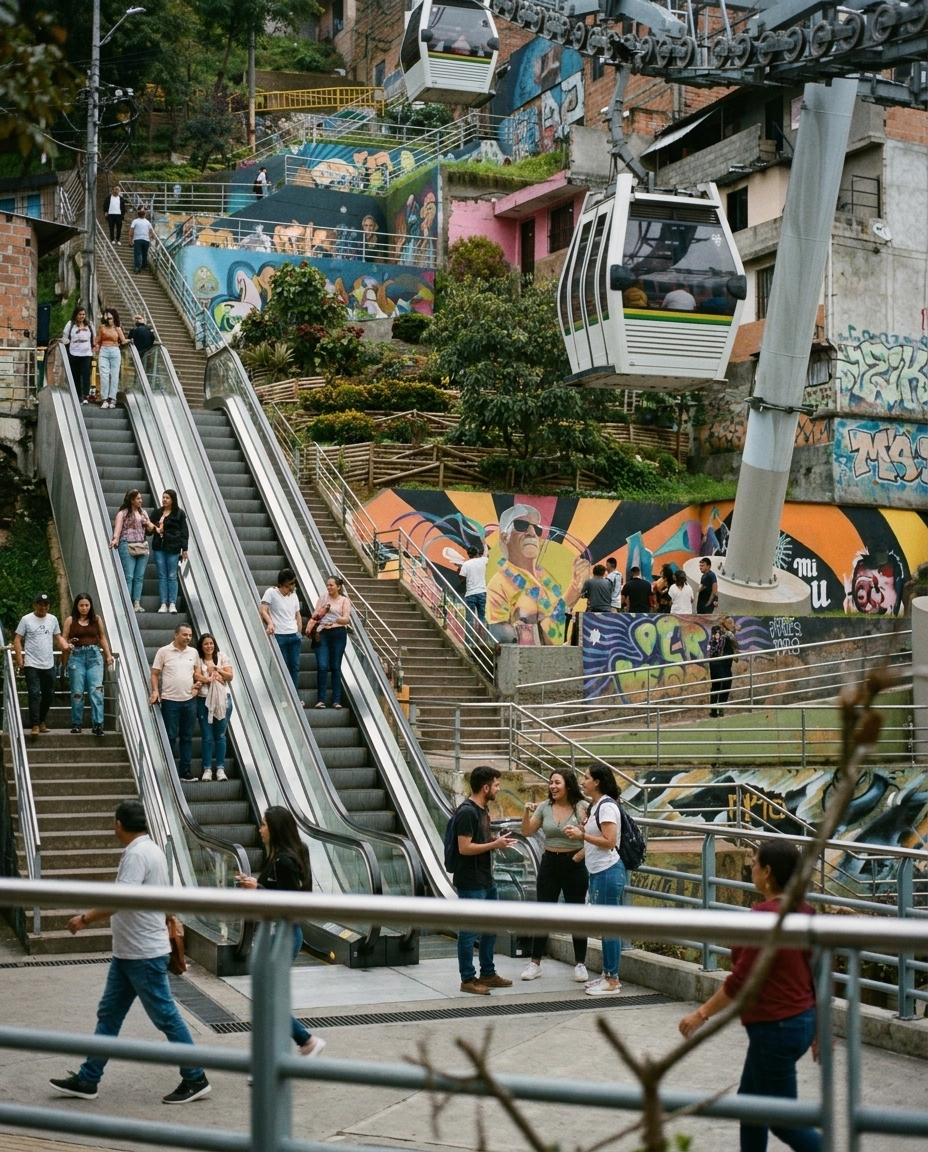
One of the most notable urban redevelopment projects in Comuna 13 is the construction of a series of escalators and cable cars, which have improved access to the neighborhood for residents and visitors alike. The escalators, the first of their kind in Colombia, have helped reduce the isolation of the community by making it easier for residents to move up and down the mountainside.
In addition to these physical improvements, the Medellín government has also implemented a number of community-based initiatives in Comuna 13 to support the social and economic development of the neighborhood. These include programs to provide education and job training for youth, as well as initiatives to promote small businesses and entrepreneurship.
Despite the progress that has been made in Comuna 13, there are still challenges that need to be addressed. The neighborhood continues to struggle with high levels of poverty and unemployment, and there is still a need for improved access to basic services and infrastructure.
Overall, Comuna 13 has undergone a remarkable transformation in recent years through urban redevelopment and community-based initiatives. While there are still challenges to be addressed, the progress that has been made in the neighborhood serves as a model for other cities facing similar issues of poverty and violence.
The Immersive Walking Tours
One popular option is the “Real City Tour,” run by a local organization called “Real City.” This tour takes visitors on a walking journey through the streets of Comuna 13, where they can learn about the history of the area and the challenges it has faced. The tour guides are locals who have lived in the area for many years and have first-hand experience of the changes that have taken place in the neighborhood. They can provide visitors with a unique perspective on the area and its culture.
All of the walking tours in Comuna 13 are designed to provide visitors with a unique and immersive experience of the neighborhood. They offer a chance to learn about the history and culture of the area, while also supporting the continued development and improvement of the community.
Street Performers, Graffiti and Street Art
One of the most striking features of Comuna 13 is the large murals that cover the walls of many of the buildings in the area. These murals are often brightly colored and depict a range of themes, from political and social issues to more personal and emotional subject matter. They serve as a way for the community to express themselves and tell their own story.
The street art scene in Comuna 13 is also known for its diversity and inclusivity, with many of the murals depicting strong women, Afro-Colombian and indigenous culture, as well as messages of peace and non-violence.
In addition to the murals, visitors can also see a variety of other street art forms in Comuna 13, including graffiti, stickers, and street installations. These pieces are created by both local and international artists and can be found throughout the neighborhood.
Another important aspect of Comuna 13’s culture is the presence of street performers. They are an important part of the community, providing entertainment and a source of income for many local residents. Visitors can see a variety of street performers, including musicians, dancers, and acrobats, in the streets of Comuna 13.
Overall, the street art and graffiti in Comuna 13 is an important part of the neighborhood’s culture and history. It is a reflection of the community’s resilience, determination and its desire to tell their own story. The street art and the street performers are an integral part of the experience of visiting Comuna 13, and should not be missed.
The Famous Escalators of Comuna 13
The escalators in Comuna 13 are a unique and innovative solution to the challenge of accessing the neighborhood, which is located on a steep hillside. The escalators are the first of their kind in Colombia and were installed as part of a larger urban redevelopment project aimed at improving the quality of life for residents and reducing crime and violence in the area.
The escalators have been instrumental in making it easier for residents to move up and down the steep hillside, which was previously a major obstacle. Before the escalators, residents had to walk up and down the steep inclines, which was especially difficult for the elderly, disabled, and those carrying groceries or other heavy items. The escalators have also improved access to basic services such as schools, healthcare centers, and public transportation.
The escalators are also a major tourist attraction, giving visitors a unique way to experience the neighborhood and take in the stunning views of the city. They have helped to reduce the isolation of the community by making it easier for visitors to reach the area.
The escalators have been widely praised for their positive impact on the community and have been recognized as a model for other cities facing similar issues of poverty and isolation. The escalators have also been an important part of the Medellín government’s efforts to promote social and economic development in Comuna 13.
Getting Something To Eat
Comuna 13 is home to a diverse range of restaurants, cafes, and street vendors offering a variety of delicious and affordable food and drink options.
For traditional Colombian cuisine, visitors can try the local specialty of “Bandeja Paisa,” a hearty dish that typically includes rice, beans, meat, avocado, and plantain. Many local restaurants serve this dish, and some also offer other traditional Colombian dishes such as “Ajiaco” and “Sancocho.”
For street food, visitors can find a variety of vendors selling traditional Colombian snacks such as “Empanadas,” “Churros,” “Chicharrones” and “Arepas.” Visitors can also find street vendors selling fresh fruit juices and smoothies made with tropical fruits like “Lulo,” “Maracuya,” and “Guanabana.”
For a more casual dining experience, visitors can find a number of small local cafes and “panaderias” (bakeries) offering sandwiches, pastries, and fresh coffee.
For those looking for a more upscale dining experience, there are also a few restaurants in the area that offer international cuisine and a variety of vegetarian and vegan options.
As for drinks, Comuna 13 has a few bars and clubs where visitors can have a night out and enjoy the local music, and also some places to enjoy a cold beer or a cocktail.
In general, Comuna 13 is a great destination for those looking for a unique and affordable dining and drinking experience, with a wide range of options that cater to different tastes and preferences.
Travel Tip / FYI
Expect to be walking for about 2 hours in Comuna 13. During the weekday is the best time to go — less congested. Comuna 13 gets extremely crowded during the weekend, which makes it difficult to walk on the path. Taxis won’t take you to the top where the stairs begin, so expect to hike up a steep hill before getting to the steps.
Some additional items you should bring to make your experience more comfortable:
- Sunscreen or hat
- Comfortable shoes and clothing
Location Hours
Although Comuna 13 San Javier is a neighborhood, businesses and tourism activity is open at the recommended times below. Some tourists do like to wander in the neighborhood off hours; however, this is not recommended.
- Monday to Friday: 9am to 6:00pm
- Weekend and holidays: 10am to 6pm
Getting There & Parking
Metro: The closest metro station to Comuna 13 is San Javier station. If you’re coming from Poblado, take Line A to San Antonio station and transfer to the B line. Take the B line to the last stop, which is San Javier. From San Javier it’s about a half mile walk to the Comuna 13 escalators.
Taxi / Uber: Most taxis know where Comuna 13 is, but a lot of the taxis in Poblado seem to be clueless. It’s best to grab a taxi from the Laureles area to take you to Comuna 13. You can just type “Comuna 13 Tour” in Uber and it’ll take you straight there.
More things to do
All things to do →Planning your day around Comuna 13?
Ask Kathe what to pair it with, when to go, and how to get there. Answers come from a verified local source, not the open internet.